1. Daron Acemoglu
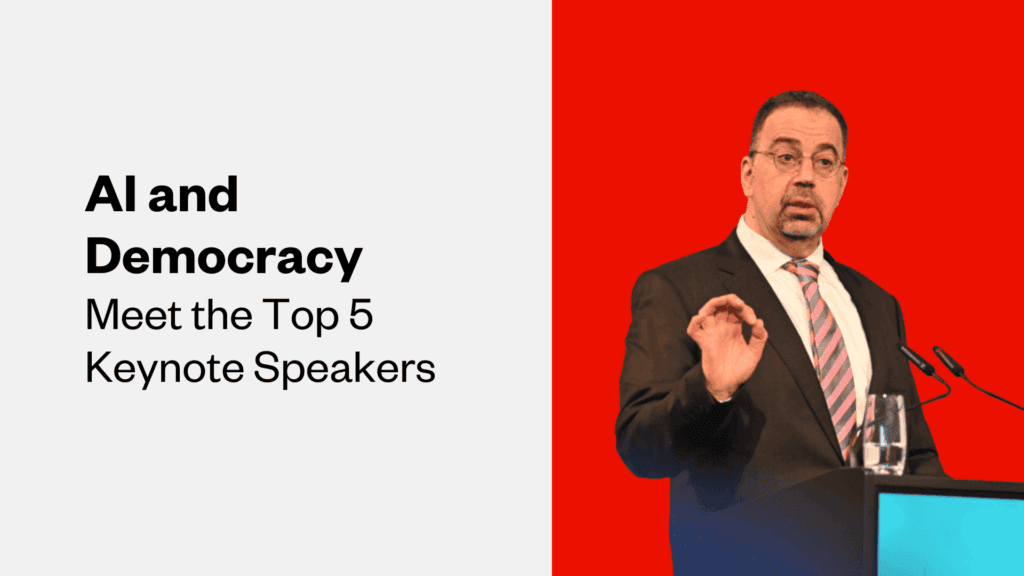
Advances in technology don’t automatically bring social progress, says 2024 Nobel Prize winner Daron Acemoglu, the 3rd most cited economist in the world. Rather, we need to choose to use innovation and power as a tool for stronger democracy and shared prosperity. Daron is the bestselling co-author of Why Nations Fail, the blockbuster book on why strong institutions are the overlooked key element to building strong nations, and his book Power and Progress is “the blueprint we need for the challenges ahead” (Shoshana Zuboff). Breakneck advancements in AI will change everything about our society, Daron says—we must keep our eyes on the real opportunities to ensure they benefit us all.
2. Shoshana Zuboff
In her landmark, epoch-defining bestseller The Age of Surveillance Capitalism, Shoshana Zuboff coined the term “surveillance capitalism” to refer to the way tech companies claim private human experience as free raw material for translation into behavioral data. An honest, lucid, and powerfully optimistic speaker, Shoshana reveals how the rapid rise of AI is changing the landscape and threatening to override our rights—and what it will take for us to find a better way forward. In empowering talks, she challenges us to reclaim our data, chart a course towards a more ethical technological landscape, and save our democracy.
3. Karen Hao
“The way we develop technology is now fundamentally broken,” says Karen Hao. “But I truly believe that we can fix it.” This TIME100 AI honoree is a long-time Silicon Valley insider and the author of Empire of AI: a thrilling look into the biggest tech arms race in history. TIME calls it a “page-turner that has made waves not just in Silicon Valley but around the world,” and writes that Karen “is fundamentally shaping many people’s perceptions and understanding of the company at the center of the AI revolution.” In clear-eyed, actionable talks, this award-winning journalist draws on her years of insider access to OpenAI to show us how thoroughly AI will alter society—and what role we can all play in shaping it so that it benefits everyone.
4. Kate Crawford
Artificial intelligence systems play a powerful role in our everyday lives, but they can often seem abstract and opaque. A world-leading scholar who was named to the inaugural TIME100AI and has spent two decades at the cutting edge of technology and AI research, Kate Crawford draws on her award-winning book Atlas of AI to show the physical landscape of AI: the labor and resources that go into the tools we take for granted. We are at a crucial turning point for rethinking how these technologies are used for a more just and democratic society, she says—and if we understand what’s at stake, we can lay the foundation for a better tomorrow.
5. Geoffrey Hinton
AI is redefining what intelligence means—and what humanity looks like. No one has shaped that conversation more than Geoffrey Hinton. Known as the “godfather of AI” for his pioneering breakthroughs in machine learning and neural networks, Geoffrey received the Nobel Prize in Physics along with his colleague John Hopfield. In talks, this speaker offers a measured view of the advancements ahead, raising urgent questions about what comes next. He goes beyond the hype to offer an honest, thought-provoking look at how AI will reshape jobs, decision-making, and the role of work in our lives—and why now is the moment to rethink everything.
Interested in having one of these AI speakers give a talk at your event?
Get in touch with us! We’d love to help you book them to speak at your conference, event, or meeting.
Frequently Asked Questions About AI and Democracy Speakers
What topics do AI and democracy speakers talk about?
The most in-demand AI and democracy speakers are tackling the existential questions facing free societies:
- Algorithmic Governance and Democratic Accountability
Who decides when an algorithm determines bail, parole, or benefits eligibility? Learn how to create oversight mechanisms that preserve democratic control over automated decision-making. - Information Integrity and Electoral Systems
Discover how AI-generated content, microtargeting, and algorithmic amplification are reshaping elections—and what safeguards democracies need to protect authentic civic discourse. - Power Concentration and Tech Monopolies
Understand how a handful of companies accumulating unprecedented wealth and influence threatens the balance of power between corporations and democratic institutions. - Digital Rights and Surveillance
Build frameworks for protecting privacy, freedom of expression, and civil liberties as AI surveillance capabilities expand beyond what Orwell could have imagined. - AI Regulation and Democratic Policymaking
Navigate the challenge of regulating technology that evolves faster than legislation, while ensuring public participation in decisions about AI’s role in society. - Civic Participation in an Automated World
Ensure citizens maintain agency and voice even as AI systems make more decisions that affect their daily lives. - Bias, Justice, and Algorithmic Fairness
Redesign systems to prevent AI from encoding and amplifying historical inequalities that undermine democratic ideals of equal treatment.
The bottom line? AI is redefining not just how democracies function—but whether they can survive in their current form. And the right keynote speaker will help you understand and shape that transformation.
How do I book an AI speaker?
Step 1: Reach Out
Start by telling us a bit about your event—what kind of audience you’ll have, your goals for the session, and any themes you want the speaker to cover. Not sure yet? No problem. We’re here to help you refine your vision.
Step 2: Get Curated Recommendations
Based on your needs, we’ll suggest a short list of AI speakers: just 3-5 names whose background, expertise, and presentation style match what you’re looking for. Whether you want someone deeply academic, inspirational, or with a great story to tell, we’ll find the right fit for your event.
Step 3: Finalize the Details
Once you’ve selected your speaker, we handle the logistics—from fee negotiation and scheduling to travel planning and AV requirements. We’ll ensure everything is clearly laid out in writing, with ongoing support all the way up to event day.
Step 4: Post-Event Support
Want to bring your speaker back for a follow-up session? Need materials for your event recap? We’re still in your corner after the curtain falls.
We’d love to take some of the work off your plate. If that sounds like a dream, contact us today for help with your AI event!
What is an AI and democracy keynote speaker?
An AI and democracy keynote speaker helps organizations, governments, and civil society understand how artificial intelligence is reshaping democratic institutions and civic life. These speakers—ranging from tech policy experts to digital rights advocates—specialize in illuminating the tensions between rapid technological change and democratic values. Their talks explore how AI affects voting, justice, free speech, privacy, and the fundamental social contracts that underpin democratic societies.
How much does it cost to hire an AI and democracy keynote speaker?
Fees typically range from $15,000 for emerging voices to $75,000+ for globally recognized authorities on tech governance and democratic theory. The investment reflects the critical nature of these conversations for organizations navigating the intersection of technology and democratic values.
What makes a great AI and democracy keynote speaker?
The best AI and democracy speakers combine technical understanding with deep knowledge of political systems and social dynamics. They’re not just critics or cheerleaders—they’re thoughtful analysts who help audiences understand both the promises and perils of AI for democratic society. A great speaker in this space brings historical context, global perspective, and actionable insights for protecting democratic values in an algorithmic age.
What are common audience takeaways from AI and democracy keynotes?
Attendees leave with frameworks for understanding how AI impacts democratic processes, strategies for ensuring accountability in automated systems, and practical approaches to preserving human agency. Many report feeling better equipped to participate in policy discussions, implement ethical AI practices, or advocate for democratic safeguards in their organizations.
Do AI and democracy speakers work with non-technical audiences?
Absolutely. The best speakers in this space excel at making complex technical and political concepts accessible to diverse audiences—from corporate boards to community groups, policymakers to students. They focus on what AI means for democratic participation and human rights, not just technical specifications, making their insights relevant whether you’re a CEO, a citizen advocate, or anywhere in between.