








Great leaders make history—but the right conditions make great leaders.

Pulitzer Prize-winning author of Guns, Germs, and Steel and Profits, Prophets, Coaches and Kings

Jared Diamond | Pulitzer Prize-winning Author of Guns, Germs, and Steel, Collapse, and Upheaval
Play VideoNow Playing

What Can We Learn from Traditional Tribal Societies about Dealing with Dangers? (3:16)

Play VideoNow Playing

Only We Can Undermine Our Own Democracy

Play VideoNow Playing

Confronting National Crisis Through a Psychological Lens (6:67)

Play VideoNow Playing

What Are The Themes that Cause Societies to Collapse? (19:49)

Lavin Exclusive Speaker

When do leaders actually make a difference—and why? It’s the question that animates every boardroom, every election, every NFL season. And no one is better positioned to answer it than Jared Diamond: Pulitzer Prize winner, New York Times bestselling author of Guns, Germs, and Steel and Collapse, and one of the world’s Top 10 Public Intellectuals (Foreign Policy). “One of the few people who have changed the way we see human nature” (The Independent), Jared has spent a career illuminating the forces that shape human civilization. Now, in Profits, Prophets, Coaches and Kings, he turns that same sweeping historical lens on leadership itself. In incisive talks, he draws on the lives of iconic leaders across business, history, sport, and religion to show that leadership effectiveness isn’t a matter of character alone, but of the precise conditions under which a leader operates: resources, geography, culture, technology. For any organization navigating succession, strategy, or change, Jared offers something rarer than inspiration: a rigorous, honest framework for understanding how to form leaders who actually make a difference.

“An undisputed global star of comparative history.”

The Times

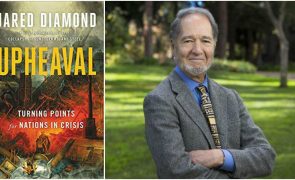
Jared Diamond is a MacArthur Genius, professor emeritus at UCLA, and “the most considered, courageous and sensitive teller of the human story writing today” (Independent on Sunday).

His latest book, Profits, Prophets, Coaches and Kings, brings that same civilizational scope to a question every organization is quietly asking: do leaders actually change outcomes, or do we only think they do? Drawing on the lives of iconic leaders across business, history, sport, and religion—from Botswana president Seretse Khama to legendary UCLA coach John Wooden—Jared argues that great leadership is neither heroic exception nor accident of circumstance, but the product of precise, learnable conditions.

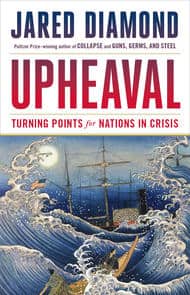
In his blockbusters Guns, Germs, and Steel, Collapse, and Upheaval, Jared transformed our understanding of what makes civilizations rise, thrive, fall, change, and navigate crisis. Guns, Germs, and Steel (adapted into a hit three-part documentary by the National Geographic Society and broadcast on PBS) explained how the gaps in power and technology between human societies originate primarily in environmental differences. It has sold over two million copies and been translated into 25 languages. The #1 New York Times bestselling follow-up, Collapse, examined a range of past societies to identify why they either collapsed or continued to thrive. In Upheaval, Jared revealed how both nations and individuals can become more resilient—a narrative both epic and groundbreaking—Bill Gates named it one of his Top 5 Summer Books, saying that “[Diamond] reminds us that some countries have creatively solved their biggest problems … showing that there’s a path through crisis and that we can choose to take it.”

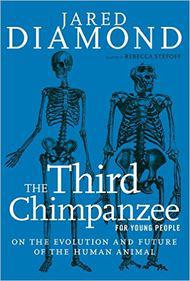
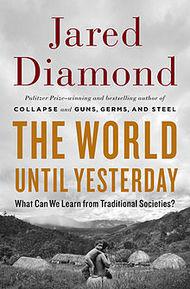
A professor emeritus at UCLA, Jared is also the author of the internationally bestselling books The World Until Yesterday, and The Third Chimpanzee. He has received some of the world’s most prestigious awards, including the MacArthur “Genius” Grant, the Dickson Prize in Science, the Tyler Prize for Environmental Achievement and the National Medal of Science, America’s highest civilian award in science. Foreign Policy has named him one of the world’s top 10 public intellectuals.

Speech Topics

Leadership
Profits, Prophets, Coaches and KingsLeadership That Actually Matters

We promote and fire the wrong people, pay CEOs based on fuzzy KPIs, and credit founders with miracles they didn’t perform—because we fundamentally misunderstand when leadership actually changes outcomes. Jared Diamond, Pulitzer Prize-winning historian and one of the world’s Top 10 Public Intellectuals (Foreign Policy), has spent a career proving that the forces shaping civilization run deeper than any single person. Now he turns that same sweeping analytical lens on leadership itself.

Drawing on his book Profits, Prophets, Coaches and Kings, Jared uses the stories of iconic leaders across business, history, sport, and religion to build a rigorous, evidence-based framework for understanding when leaders genuinely make a difference, and what circumstances help them along. From environmentalist Rachel Carson to UCLA’s John Wooden, he shows that leadership effectiveness is determined not by character alone, but by the interplay of resources, geography, culture, technology, and more.

Audiences will leave with a sharper, more honest understanding of what leadership can and cannot do, and a practical framework for identifying and shaping the conditions under which the right leader, in the right situation, can change the course of an organization.

Read more
Change Management
The National and the PersonalTwo Views on Advancing Through Crisis

When a nation experiences crisis, selective change must be adopted in order to come out the other side. As people, we also experience personal crises, triggered by factors like time-of-life (think teen anguish or midlife crossroads) or external shocks (like divorce, the death of a loved one, professional or financial strain). In this talk, Jared Diamond highlights the macro to help us understand the micro, and vice-versa. As he demonstrates, personal crisis also requires implementing selective change, which some of us are better at. Psychologists have identified a dozen factors predicting the likelihood that an individual will succeed in resolving such a personal crisis through selective change. But nations similarly undergo national crises, whose resolution similarly requires selective national change. What are the skills and traits that move us forward, in both domains? In this fascinating keynote, Jared examines how the personal really is political, and how we can learn from adversity on the grandest and smallest of scales.

Read more
Politics & Society
Societal DevelopmentThe History of Everybody, for the Last 13,000 Years

Today, there are huge differences between peoples of the five inhabited continents in their wealth and power. In particular, over the last five centuries, European peoples have expanded and conquered around the world. Why did history turn out that way, instead of in a different or opposite way? Why didn’t the Aztec Emperor Montezuma conquer Spain, instead of the actual result that soldiers of Spain’s emperor conquered the Aztecs?

13,000 years ago, all peoples on all continents were hunter/gatherers, living at approximately similar levels of technology and social organization and power. Hence the inequalities of the modern world must have arisen from differences in rates of societal development on the different continents over the last 13,000 years. Those different rates of development constitute the biggest question about human history. How can we account for those different rates of development? Jared Diamond will discuss that big question in the light of his famous Pulitzer Prize-winning book Guns, Germs, and Steel.
Read more

Featured Books

Other News