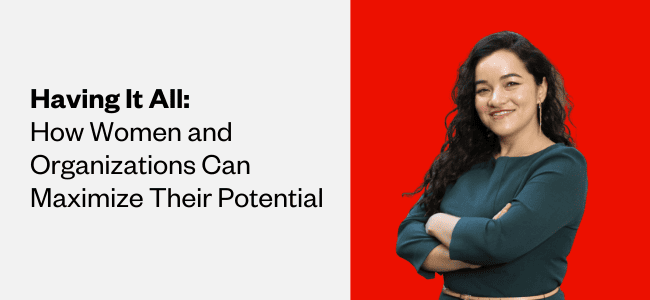
A 40 Under 40 MBA prof, Corinne has spent her career helping women get the best from their working lives and helping leaders get the best from their workforce. Her new book, Having It All: What Data Tells Us About Women’s Lives and How to Get the Most Out of Yours (out Sep 23), is “a must-read for working women and their allies” (Katy Milkman, How to Change). Corinne sat down with us to explain one thing women can do to maximize their earning potential, and one thing leaders can do to gain an edge over the competition.
Women: Think in life chapters, not financial quarters.
Many women go through a period of what Corinne calls “the squeeze”: when you’re making career investments but also have young kids at home. Your kids haven’t started school, which requires a larger time investment from you, but your career investments haven’t paid off yet, which leaves you in a tricky financial situation.
Drawing on research, Corinne encourages women to think of their career as a book with many chapters. For example, in periods where everything seems like it’s coming to a head at once, consider “borrowing against your future earnings”: outsourcing tasks to keep yourself going through the squeeze. “Not outsourcing a task is choosing to hire yourself to do it,” Corinne says. “If you think about what your potential wage is in the future and consider the time investments you’re making for that right now, you can make a better decision about whether to hire yourself to do this job or hire someone else.”
Leaders: Offer boundaries, not flexibility.
“Firms need to figure out how to get women through the squeeze—because if they can retain their employees through that period, then they get to keep them forever,” Corinne says. So what do working moms actually want?
We often think that the answer is flexibility: working from home, choosing their own hours. But women actually want to avoid unpredictable evening and weekend demands that will make them give up time with their family.
The key to talent retention, then, is counterintuitive: offering rigid boundaries, not flexible ones. There are practical ways to implement this—some as simple as marking no-facetime blocks on your calendar, or ensuring enough overlap that your employees can alternate weekends on-call. “Knowing the research and thinking creatively can help us make accommodations better and cheaper,” Corinne says.
Interested in hearing more from Corinne?
Get in touch to learn more, and to book her to speak at your next event!