1. Move from the craft of teamwork to the art of collaboration.
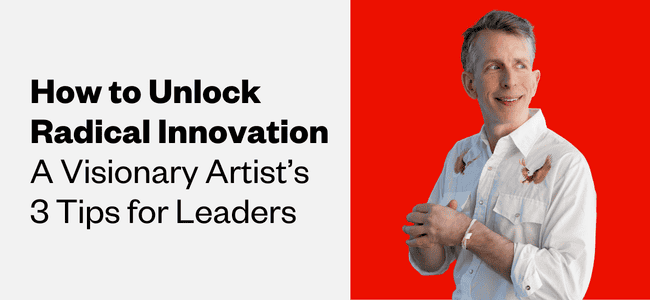
A pioneering tape artist, Michael creates ambitious but temporary murals with painter’s tape and teaches a wide range of audiences to do the same. He’s run hundreds of workshops over nearly four decades, including 10 years at General Electric’s Leadership Development Center. Most organizations, he says, run on the craft of teamwork: creating and executing a plan together. But the greatest organizations tap into something different: the art of collaboration.
“Collaboration is where you say, ‘Here’s a direction, but we need to be open to the possibility that as we move towards it, it may change,'” he says. For true innovation, we need to learn to work through ambiguity, give and accept critique, and continue even when the ending isn’t certain.
2. Find a “good trouble friend.”
Michael and his collaborators built a secret apartment in a mall and lived there for four years—the documentary about that project hit the Netflix Top 10 list in its first day on the platform and has been watched for over 288 million minutes (548 years). He says that for any audacious project, worthwhile change, or sustainable momentum, you need a team: what he calls “good trouble friends.”
“Good” refers to the shared intention of making positive change, he explains. “Trouble” refers to understanding where the boundaries are… and when to push against them. “And ‘friend’ is the critical thing,” he says, “because that allows you to collaborate, have conversations, to monitor and grow ideas.”
3. Build trust by drawing a bad raccoon.
Organizations can have the best people and still trip themselves up if they don’t have the trust that enables collaboration. In some workshops, Michael says, he’s seen deference towards the top leaders stifle everyone else’s ideas. But there’s a simple way to change that.
He explains one technique he’s used to enable doctors to become more approachable: “We like to teach them the power of drawing a bad raccoon in front of their patients.” Anyone in a position of authority can build trust by allowing others to watch them struggle at something—even something as small as drawing. “It helps them connect to you as a person,” he says.
Want more from Michael?
Learn more about him here, then contact us to book him for keynotes and workshops!