

The Lavin Agency Speakers Bureau
A speakers bureau that represents the best original thinkers,
writers, and doers for speaking engagements.
A speakers bureau that represents the best original thinkers,
writers, and doers for speaking engagements.
As AI drives more business decisions, leaders who understand what prediction is—and what it isn't—will be better equipped to leverage uncertainty and defy the odds.
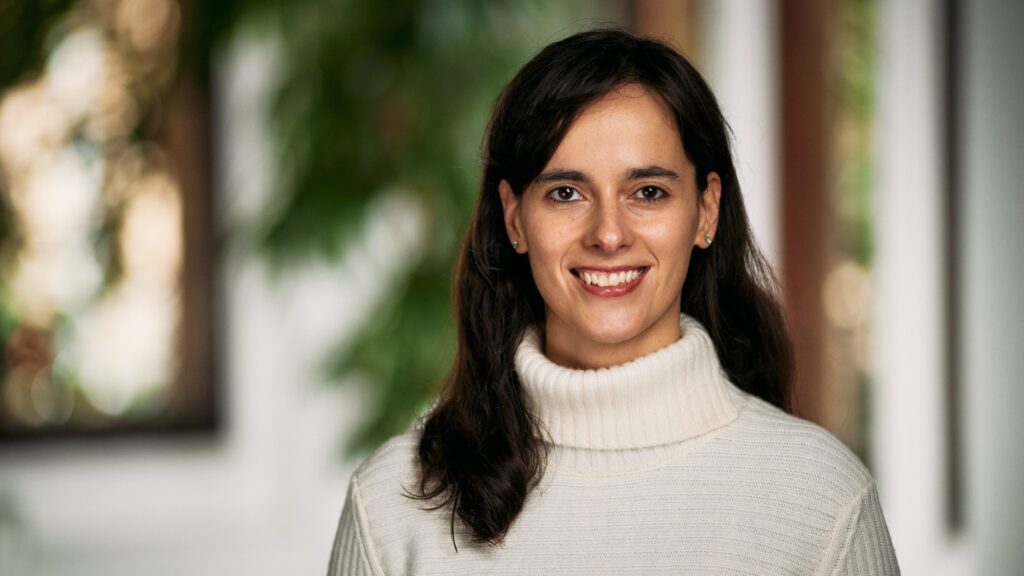
We use prediction every day: from buying stocks to checking the weather to, increasingly, using AI tools to make business decisions. But rarely do we stop to wonder what prediction is, and how we can use it better. “There is much work done on how to forecast,” says Carissa Véliz, “but astonishingly little work on what exactly is a prediction, what effect it can have on the world, and when we should use (and not use) it to build the world that we want to inhabit.” An Oxford philosopher who has advised the United Kingdom and Spanish governments as well as companies worldwide, Carissa is the author of Privacy Is Power (an Economist Best Book of the Year)—and her latest book, Prophecy, is “the most important book you will read for years” (Roger McNamee, Zucked). In talks based on the book, Carissa offers a sweeping, incisive look at the landscape of prediction. She reveals how trying to decrease risk through prediction can actually have the opposite effect, how understanding prediction tools like AI can help you defy the odds, and how to leverage uncertainty for outsized success. “The good life is not a script to discover or follow, but a blank page to write on,” she says.
“Captivating. Véliz elucidates complex philosophical and technological concepts with ease, while covering a vast range of topics. Lively and erudite, this impresses.”—Publishers Weekly starred review
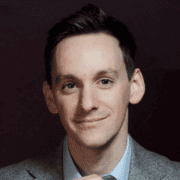
Carissa Véliz is a writer, keynote speaker, and Associate Professor of Philosophy at the Institute for Ethics in AI at the University of Oxford, where she is also a Fellow at Hertford College. Her work focuses on the ethics of AI, privacy, business ethics, and public policy.
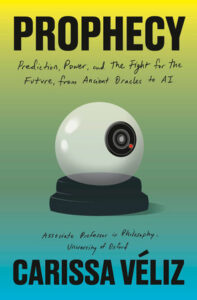
Her most recent book is Prophecy: Prediction, Power, and the Fight for the Future, from Ancient Oracles to AI. In it, she reveals how extensive use of machine-led prediction is increasing our risk and undermining our ability to defy the odds. It’s a vital look at the big picture of prediction and AI, and a galvanizing call to action to reclaim our agency. Roger McNamee, the New York Times bestselling author of Zucked, calls it “a masterpiece.”
Her previous book is Privacy Is Power: Why and How You Should Take Back Control of Your Data. Named an Economist Best Book of 2020, it calls for us to end the surveillance economy that allows governments and corporations to spy on us for their profit. Carissa proposes concrete measures to bring that end about, offering practical solutions for policymakers and ordinary citizens alike. Kirkus calls it “a powerful cri de coeur for technological liberation that merits the attention of every consumer of digital services,” and Hannah Fry (author of Hello World) hails it as “an essential guide to one of the most pressing modern issues.”
She is also the editor of the Oxford Handbook of Digital Ethics, and received the 2021 Herbert A. Simon Award for Outstanding Research in Computing and Philosophy from the International Association of Computing and Philosophy. She is a 2026 TED Fellow and TED mainstage speaker.
She advises companies, governments (including the UK and Spanish governments), and other public and private institutions around the world on privacy, digital technologies, and the ethics of AI. She is also a board member of the Proton Foundation and a member of UNESCO’s Women 4 Ethical AI. She has published articles in the Guardian, The New York Times, New Statesman, and the Independent. Her academic work has been published in The Harvard Business Review, Nature Electronics, Nature Energy, and The American Journal of Bioethics, among other journals.

Author, Artificial: A Love Story New Yorker Cartoonist

Author of The Loop: How A.I. is Creating a World without Choices and How to Fight Back NBC News Technology Correspondent Former Editor-in-Chief of Popular Science Magazine AI Strategic Advisor to Fortune 500 Companies

Founding President, PlusCo Venture Studio Former Chief Creative and Innovation Officer, Cossette

Author of The Loop: How A.I. is Creating a World without Choices and How to Fight Back NBC News Technology Correspondent Former Editor-in-Chief of Popular Science Magazine AI Strategic Advisor to Fortune 500 Companies

Harvard Economist MacArthur Genius Studying Economic Opportunity Director of Opportunity Insights

Instant New York Times Bestselling Author of Empire of AI One of the Most Influential People in AI (TIME, Business Insider) Lead Designer of The Pulitzer Center's AI Spotlight Series Co-Host of BBC's Podcast The Interface

Author of The Loop: How A.I. is Creating a World without Choices and How to Fight Back NBC News Technology Correspondent Former Editor-in-Chief of Popular Science Magazine AI Strategic Advisor to Fortune 500 Companies

Speaker on AI and Education Executive Director of the Stanford Accelerator for Learning

Former CEO, Everyday Robots, Google’s Pioneering AI and Robotics Moonshot

#1 New York Times Bestselling Author of Grit and Situated | Pioneering Researcher on Grit, Perseverance, and the Science of Success

Nobel Prize Winner | 3rd Most Cited Economist in the World | Bestselling Co-Author of Why Nations Fail and Power and Progress

Harvard Business School Behavioral Science Professor | "40 Under 40 MBA Professor" | Author of TALK: The Science of Conversation and the Art of Being Ourselves

#1 New York Times Bestselling Co-Author of Abundance | Host of thePlain English Podcast | CBS News Contributor

#1 New York Times Bestselling Author of How the Word Is Passed and Above Ground | The Atlantic Staff Writer

In the age of AI, many of us are using prediction tools to minimize uncertainty. But what if the tools we’re using to decrease risk are actually increasing it? And how can we ensure these tools serve us rather than the other way around?
In this far-ranging, accessible talk, award-winning author and philosopher Carissa Véliz reveals the uses and abuses of prediction, drawing on her experience advising companies and governments around the world. All too often, she says, prediction as a risk management tool ends up surreptitiously increasing risk for individuals, institutions, and society at large. But there are other ways to make decisions, which can help us not only understand our odds, but defy them for great success.
With surprising research, incisive anecdotes, and personal experience, Carissa helps audiences better understand prediction and avoid its pitfalls. Audience members leave armed with a toolkit for alternative decision-making processes, which includes preparation as opposed to prediction, and transparent and verifiable criteria in contexts in which fairness and truth are paramount.

We’ve built much of our lives and work on digital technology—but what’s happening underneath it? Beneath every screen, every algorithm, every AI tool lies something older and far more resilient: the analog world we depend on.
“In an age dominated by the digital, we tend to forget that everything virtual depends on the analog,” says Carissa Véliz: “that the analog is the substrate of all else, that we are analog creatures.”
In this talk, the author of Prophecy and Privacy Is Power challenges audiences to rethink their relationship with digital technology—and to discover what we stand to gain through the power of the analog. Drawing on philosophy and her research into technology, she argues that analog backups for crucial functions are far more robust than digital ones, and that protecting analog spaces and resources is essential to preserving our autonomy. Audiences leave with a new lens on technology’s role in shaping what it means to be human.