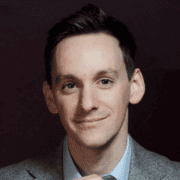
In a world where humans and AI-powered robots coexist, we must reimagine the very idea, the nature, and the purpose of work.

Former CEO, Everyday Robots, Google’s Pioneering AI and Robotics Moonshot

Lavin Exclusive Speaker

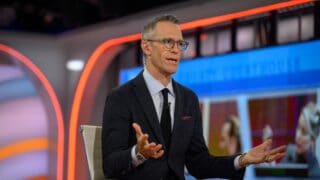
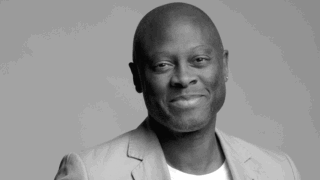
A world in which robots and humans coexist? It’s no longer a far-off dream. It’s here. The future of work—the very nature of humanity—will be upended by AI and robotics, and the widespread societal and economic impacts will be felt by everyone. Few are better equipped to speak on this than Hans Peter Brondmo. He was Vice President at Google, where he founded Everyday Robots, the famous AI-meets-robotics moonshot dedicated to making science fiction a reality. (Think: helper robots for everyday life.) In fascinating keynotes, Hans Peter looks at the challenges and opportunities and offers unexpected provocations that make audiences think differently about the important topics of our time: What, exactly, will work look like? How will we sustain economic growth? Where and how will we find purpose, identity, community, and fulfillment? What, in other words, will it mean to be human?

A creative spirit, a respected technologist, a high-ranking executive: Hans Peter Brondmo’s insights into robots are not theoretical—they are hard-earned from his work at Google, where he led the pioneering team that built AI-powered general-purpose helper robots that autonomously performed everyday tasks across Google buildings. (Google invested more than half a billion dollars into this venture.) He has zero doubts: the robots are coming. They will take on an ever-expanding range of physical and cognitive tasks. They will toil tirelessly and won’t need lunch breaks or take vacations. Some may resemble us, but most won’t. One thing is certain: their imminent emergence requires a fundamental rethinking of work, life, and many of the structures that define our modern society. In customizable keynotes, and through the widest possible lens, Hans Peter tackles these issues head on, to provide a much-needed—and ultimately hopeful—peek into the future.

Hans Peter’s talks are vital for anyone who’s interested in AI, the workforce, and what increasing automation will do to our productivity and quality of life. “Robots are AI embodied,” he says: physical bodies for the AI that up until now has existed mostly on our screens. He walks audiences through everything they need to know about robots and AI, using accessible examples to reveal how the robots that end up working alongside us won’t be scary, like the Terminator, but rather helping hands and collaborators, like WALL-E.

As a serial entrepreneur, Hans Peter has spent his career building products and companies that leverage emerging technologies to empower millions. He is based in San Francisco, grew up in Norway, and has lived and worked in Boston, Tokyo, Geneva and Berlin. He brings a truly global perspective to the topic. He has delivered keynotes, advised executives and policymakers, and lectured at top universities around the world, and has testified at US Senate and FTC hearings. He is also the author of a New York Times bestseller, The Eng@ged Customer, and is currently working on his second book, Being Human in an Age of Intelligent Machines. On top of everything else, he is an adventurer and a photographer, animated by “love, adventure, creativity, curiosity, wonder, gratitude, and joy.”

Speech Topics

Artificial Intelligence
The Robots Are ComingAnd They Cannot Get Here Soon Enough

Aging populations and declining birth rates are leading to labor shortages worldwide. By the end of this century, populations will shrink across most continents, making traditional economic growth unsustainable. Without intelligent, highly capable autonomous robots, economies as we know them will collapse.

Enter Hans Peter Brondmo. The former CEO of Everyday Robots, Google’s AI-meets-robotics moonshot, Hans Peter offers a unique look into what’s happening in the world of robotics, and how they will empower us to live and work better.

In engrossing, visionary talks, Hans Peter explains how robots will become an extension of people ourselves, and how we will come to collaborate with them to work more productively, live with purpose, and take care of the people we love. He explains what’s already happening in the field of robotics—seemingly futuristic things like AI-powered robots cleaning cafe tables, learning to sort trash in office bins, and even making music and dancing—and why this vision of human-robot collaboration holds both hope and promise for us today.

Read more
Future of Work
Talking About the Future of Work is the Wrong Conversation

AI and robots are the future of work. We must move the conversation to exploring the nature of work. Why do we work? What does work offer, beyond income? These are the big topics that will define how AI and robotics impact humanity. As machines become faster, smarter, and more capable than humans, how do we define what it means to be human? Where and how will we find identity, meaning, joy, play, connection, community…? In this talk, former Google Vice President Hans Peter Brondmo reveals how AI and robots are going to change not only the landscape of work but also the nature of humanity itself—and how we can start to embrace that to find purpose, fulfillment, and much more.
Read more
Generative AI and ChatGPT
Hire Artists, Philosophers, and HistoriansA Call to Corporations and Governments

AI-powered robots will create unprecedented disruption. To navigate this future, leaders need new approaches to how we create a future where we live good lives. We must involve artists, philosophers, historians, psychologists, anthropologists, economists, sociologists, political scientists, policy makers… in short, the social sciences, arts and humanities during the creation of the new technologies, new narratives, new frameworks and the evolution of key institutions. In this talk, Hans Peter Brondmo explains why these roles will become all the more crucial in the age of AI, and how a company or government that embraces them will gain more fulfilled people and a culture of abundance. In a world where robotics can help us ensure there’s enough for everyone, we need a humanity-informed approach to distribute the benefit and create a world that’s good for all of us.
Read more

Related Links & Articles

Interested? Read more news and articles about this fascinating keynote speaker

Related Posts

Interested? Read more news and articles about this fascinating keynote speaker

Other News