












The Lavin Agency Speakers Bureau
A speakers bureau that represents the best original thinkers,
writers, and doers for speaking engagements.

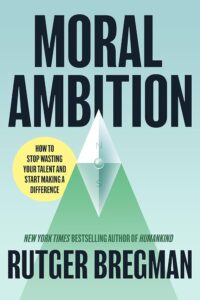
What if the secret to a fulfilling career isn’t personal achievement, but collective progress? In a world where so many talented people feel stuck in unfulfilling or even harmful jobs, Rutger Bregman offers a bold alternative: moral ambition—the drive to be the best by doing the most good. The New York Times bestselling author of three books and one of the world’s most influential voices on economics and ethics, Rutger shows how reframing your career around impact—rather than prestige—can transform your life and the world around you.
In this inspiring and practical keynote, Rutger explains his call to action of “moral ambition”: the idealism of an activist and the ambition of an entrepreneur. He offers concrete examples of individuals who’ve pivoted from profit to purpose, strategies for making high-impact choices in your career, and the data behind why doing good doesn’t mean giving up on success. And he draws on the great movements of history—from the abolitionists to the suffragettes—to show how we can and must build a coalition of people who want to make the world better. Audiences will walk away with a renewed sense of purpose and a roadmap for using their skills to tackle society’s greatest challenges.
Because if the average career consists of 2000 workweeks, why waste them?

We’re told that people are selfish, greedy, and irrational. But what if that’s not true? What if most people are, in fact, fundamentally decent—and our biggest mistake is designing institutions that assume otherwise?
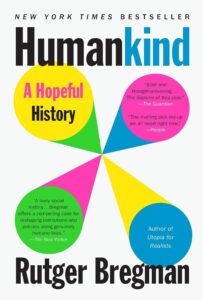
In this revelatory talk based on his international bestseller Humankind, historian Rutger Bregman turns centuries of cynical thinking on its head and makes a compelling case for radical optimism.
Drawing on cutting-edge psychology, anthropology, and real-world case studies—from crisis zones to classrooms, from Machiavelli to Freud—Rutger shows that we’re hardwired for kindness, and explains how reimagining human nature can lead to more resilient governments, workplaces, and communities. You’ll learn why people behave better in crisis than we expect, how trust-based models outperform top-down control, and why believing in the good can be a self-fulfilling prophecy. The result is a powerful new vision for a society built on trust, cooperation, and shared humanity—exactly what we need in this moment of global reckoning.

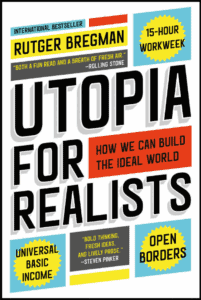
Universal basic income. A 15-hour workweek. Open borders. At first glance, they sound impossible. But history tells us that today’s “radical” ideas are often tomorrow’s common sense.
In this provocative keynote, Utopia for Realists author Rutger Bregman challenges us to dream bigger—and shows how to turn those dreams into real, lasting change.
With wit and clarity, Rutger takes audiences on a tour of history’s biggest ideas—from a Canadian city that completely eradicated poverty to a forgotten moment where a U.S. president nearly implemented basic income. He unpacks why utopian thinking is essential not only to progress but to survival, especially as AI and automation transform the economy.
Whether you’re a policymaker, business leader, or just someone who believes the future can be better, this talk will challenge your assumptions, energize your thinking, and equip you with real tools to push the world forward.