Man’s Search for Meaning, by Viktor Frankl
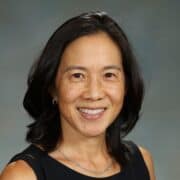
Recommended by Angela Duckworth, #1 New York Times bestselling author of Grit
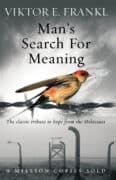 A landmark work of psychology and survival literature, Viktor Frankl’s Man’s Search for Meaning draws on its author’s experiences in Nazi concentration camps to argue that the search for meaning—not pleasure—is the central human drive. First published in 1946, Frankl’s insightful exploration of the human will to find meaning in spite of the worst adversity has offered solace and guidance to generations of readers. As new generations confront an increasingly complex and uncertain world, this classic still resonates—reminding us that meaning isn’t something we wait to find, but something we create, even in the face of hardship.
Cultures of Growth, by Mary C. Murphy
Recommended by Danny Southwick, NFL quarterback turned psychologist and grit expert
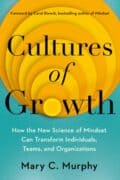 We tend to think of mindset as a binary: either you have a growth mindset (the belief that your ability can be developed through effort, learning, and persistence) or you have a fixed mindset (the belief that your ability is innate and unchangeable). But in her groundbreaking book, Cultures of Growth, psychologist and Lavin Exclusive Speaker Mary C. Murphy reveals that that’s not true. We all have a fixed mindset and a growth mindset within us, and they change depending on our environments—which means that if you build a culture of growth mindset, you can transform your whole school, team, and organization.
The Way Out, by Devon O’Neil
Recommended by David Yeager, author of 10 to 25 and psychology professor at the University of Texas, Austin
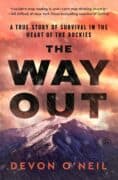 The Way Out recounts a devastating backcountry skiing tragedy in the Colorado mountains, where an unforgiving blizzard turns a quick jaunt into a thirty-hour ordeal that forever changes a tight-knit community. The book explores the pull of adventure, the aftermath of trauma, and the difficult work of guilt, forgiveness, and survival. David Yeager, one of the world’s foremost experts on the psychology of adolescents and young adults, praises its “detailed reporting, real-life adventure and danger, great writing, and tons of stories about parents and teenage kids, and about how a community heals from trauma after a tragedy.”
Having It All, by Corinne Low
Recommended by Todd Kashdan, bestselling author of The Art of Insubordination and psychology professor at George Mason University
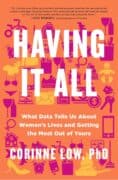 “A Wharton economist looks at the data on women’s lives and finds what you suspected: you’re facing structurally impossible circumstances,” writes Todd Kashdan. A leading expert on the psychology of wellbeing, Todd praises fellow Lavin speaker Corinne Low‘s book for her hardcore research. A Wharton economist, Corinne “treats life decisions, marriage, kids, career, education, as optimization problems with real constraints,” Todd tells us. “She’s not telling you to lean in or opt out. She’s showing you the trade-offs so you can make informed choices instead of feeling gaslit by cultural expectations.”
What We Can Know, by Ian McEwan
Recommended by Gregory M. Walton, author of Ordinary Magic and co-director of the Dweck-Walton Lab at Stanford
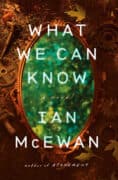 “McEwan is one of my favorite contemporary novelists,” Stanford professor Greg Walton tells us. “I’ve seen him described as one of our best psychologist novelists, and I would agree.” What We Can Know is a genre-bending literary detective novel that was named one of The New York Times‘s 100 Notable Books of the Year—it follows a lost poem and a scholar 100 years in the future who is determined to find it. “What We Can Know has bit of an unusual structure, and an unusual time perspective, as compared to his past novels, and elements of science fiction,” Greg says. “It invites us to view our lives today from a new vantage point.”
Big ideas don’t live in silos.
From trauma and trade-offs to meaning and morality, these five books reflect the breadth of thinking that defines today’s leading psychologists—and why their work resonates far beyond academia.
Interested in hearing these thinkers unpack ideas like these live, on stage? Get in touch to book these Exclusive Lavin Speakers for your next event!