







The Lavin Agency Speakers Bureau
A speakers bureau that represents the best original thinkers,
writers, and doers for speaking engagements.

A speakers bureau that represents the best original thinkers,
writers, and doers for speaking engagements.
Will AI produce broad-based societal benefit for all? Or return us to an age of empire? The path forward is in our hands.
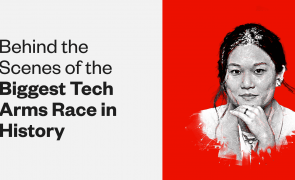
AI is upending the planet in real time, and its path of unchecked development threatens to erode democracy and return us to an age of empire, where a small group of companies dictates our future. It doesn’t have to be this way, says Karen Hao, a Silicon Valley engineer-turned-award-winning-journalist. Karen’s epic and urgent book Empire of AI—an instant New York Times bestseller called a “heroic work” by Shoshana Zuboff (The Age of Surveillance Capitalism)—is the culmination of her years of insider access to OpenAI and her original reporting, spanning five continents. TIME, which named her to their list of the 100 most influential people in AI, writes that “Hao is fundamentally shaping many people’s perceptions and understanding of the company at the center of the AI revolution.” In captivating keynotes, packed with hard-won insights, Karen assembles the fullest picture yet of the most consequential tech arms race in history. She shows us just how thoroughly AI will alter society, and, more importantly, what role we can all play in actively shaping AI so that it benefits everyone. “The way we develop technology is now fundamentally broken,” Karen says. “But I truly believe that we can fix it.”
“Our lives are about to be remade by artificial intelligence. If you ever wondered whether all of this is inevitable, whether we could save a little bit of our democracy in the age of AI, then read this book!”—Daron Acemoglu, Winner of the 2024 Nobel Prize in Economic Sciences
Called “one of the foremost tech journalists covering AI” by Dr. Joy Buolamwini, Karen Hao writes for publications like The Atlantic and leads the Pulitzer Center’s AI Spotlight Series, which trains journalists around the world on how to cover artificial intelligence.
In Empire of AI: Dreams and Nightmares in Sam Altman’s OpenAI (Penguin Press, 2025), Karen, the first journalist to ever profile OpenAI, tells the behind-the-scenes story of how a cadre of the most powerful companies in human history is reshaping the world in its image. “Excellent and deeply reported” (The New York Times), Empire of AI is an “essential work of public education” (Zuboff), “a bestselling page-turner that has made waves not just in Silicon Valley but around the world” (TIME), and a revelatory portrait of the people controlling this technology. It is the jaw-dropping story of ambition and ego, hype and speculation, plunder and destruction, politics and labor, and, of course, money and power—a brilliant and deeply necessary look at the industry defining our era, and what the future holds.
Karen was formerly a reporter for The Wall Street Journal, covering American and Chinese tech companies, and a senior editor for AI at MIT Technology Review. Her work has been cited by Congress, featured in university curriculums, and remade into museum exhibits. She has won numerous accolades, including an American Humanist Media Award and a National Magazine Award for Journalists Under 30. Karen also sits on the AI advisory board of the Craig Newmark Graduate School of Journalism at CUNY. Prior to journalism, she was an application engineer at the first startup to spin out of Google, and she received a B.S. in mechanical engineering and minor in energy studies from MIT.

Author of The Loop: How A.I. is Creating a World without Choices and How to Fight Back NBC News Technology Correspondent Former Editor-in-Chief of Popular Science Magazine AI Strategic Advisor to Fortune 500 Companies
Expert on Time and Happiness Author of Happier Hour UCLA Professor
Professor Author of Atlas of AI Leading scholar of AI and society

Founding President, PlusCo Venture Studio Former Chief Creative and Innovation Officer, Cossette
Author of The Age of Cryptocurrency and Our Biggest Fight Co-Host of the Money Reimagined Podcast MIT Media Advisor

Global AI Advisor CEO & Co-Founder of XLabs and Ribo One of Forbes’ 30 Women in AI to Watch Artificial Intelligence Pioneer

Author of The Loop: How A.I. is Creating a World without Choices and How to Fight Back NBC News Technology Correspondent Former Editor-in-Chief of Popular Science Magazine AI Strategic Advisor to Fortune 500 Companies

Founding President, PlusCo Venture Studio Former Chief Creative and Innovation Officer, Cossette

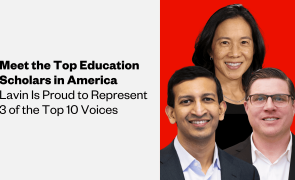
Speaker on AI and Education Executive Director of the Stanford Accelerator for Learning

Author of Grit, the #1 New York Times Bestseller | Pioneering Researcher on Grit, Perseverance, and the Science of Success

2024 Nobel Prize Winner | 3rd Most Cited Economist in the World | Bestselling Co-Author of Why Nations Fail and Power and Progress

Harvard Business School Behavioral Science Professor | "40 Under 40 MBA Professor" | Author of TALK: The Science of Conversation and the Art of Being Ourselves

#1 New York Times Bestselling Co-Author of Abundance | Host of thePlain English Podcast | Founder of the Substack Derek Thompson

#1 New York Times Bestselling Author of How the Word Is Passed and Above Ground | The Atlantic Staff Writer

In this time of technological and political upheaval, we must re-evaluate the way that we talk about and embrace AI—especially generative models like ChatGPT, and Artificial General Intelligence. Many of the ways that society could benefit from AI—better education and healthcare, a faster transition to renewables, clean air and clean water—have nothing to do with AI models today; they are based on the machine-learning models that have come before. But Silicon Valley, with OpenAI at its helm, has woven a remarkably compelling narrative about generative AI and Artificial General Intelligence being the key to progress and abundance. This narrative cloaks what’s happening beneath the surface, says Karen Hao. In this timely talk, drawing on years of original research, she examines a growing body of evidence to ask whether AI will ever produce broad-based economic benefit. Companies like OpenAI have become empires in the full sense of the word, consolidating extraordinary power and wealth in the hands of the few. In this historic moment, she shows us, the threat of the empires of AI grows clearer by the day. A return to empire is the unraveling of democracy. But there is another viable path. Karen offers an ultimately realistic and hopeful look at how to wrestle back what we’ve already lost, in order to create a world we all want.