1. Stop Asking Your AI for Answers. Ask It for Questions Instead.
The biggest mistake leaders make is treating AI like a Magic 8 Ball. You ask a question, it gives you an answer. This is not only risky—given AI’s tendency to “hallucinate” facts—but it’s also a low-value activity.
A far more powerful approach is to flip the dynamic. As Alex puts it: “It’s much better if you’re the Magic 8 Ball and you use the AI to interview you.”
For example, instead of asking, “What are the top three markets for expansion?” try this prompt: “You are a seasoned market expansion strategist. Your job is to interview our team to determine the best markets for expansion. Start by asking us about our core competencies.”
This method does two things:
It surfaces tacit knowledge: It pulls out the deep, unarticulated expertise that already exists within your team.
It reveals blind spots: The AI’s questions, free from internal politics or company bias, can expose gaps in your team’s logic and force a more rigorous thought process.
This transforms AI from a dubious source of answers into a powerful engine for discovery.
2. Take Your Internal Editor “Offline.”
Human brainstorming is inherently flawed. Even in the healthiest cultures, there’s a subconscious filter: people hesitate, worried about how an idea will land or whether it sounds foolish. This social friction kills new, creative ideas before they’re ever spoken.
An AI interviewer, however, has no ego. It’s a psychologically safe, non-judgmental partner, which can create a unique space for unfiltered thought. Alex discovered this when using a voice-to-text AI that forced her to speak without pausing. “I had to take my internal editor offline,” she explains. “I just found myself saying things out loud, without even realizing that was what I thought or believed or wanted.”
Leaders can replicate this by setting up “unfiltered AI interviews” for their teams. Task a team member to talk through a complex problem with an AI for 15 minutes, with the goal of not pausing. The transcript becomes a source of raw, authentic insights that would never have surfaced in a group meeting. This is where true innovation—not just incremental improvement—is born.
3. Combat “AI-solation” by Making Human Connection the Default.
As these powerful AI tools become more accessible and effective, a subtle but dangerous cultural shift can occur: AI-solation.
When faced with a challenge, who does your team member turn to first? Is it their colleague in the next cubicle, or the AI on their desktop? Alex noticed this in her own life: conversations she once would have had with a close friend and collaborator were now happening with her AI, Viv. The AI was just so easy, available, and frictionless.
When this happens at scale across an organization, it erodes the very fabric of company culture. It reduces the spontaneous human collisions that build trust, foster mentorship, and spark unexpected ideas.
Leaders must proactively counter this by establishing a “human-first default.” Alex’s own rule: if a conversation can be had with a person, it should be. Encourage teams to use AI for solo deep work and unfiltered ideation, but then bring those ideas back to the group for collaborative debate, refinement, and connection.
AI is a tool to augment human teams, not replace their core interactions. By using it as an interviewer and a catalyst for unfiltered creativity—while intentionally maintaining your culture of collaboration—you can move beyond simple productivity and unlock a true strategic advantage.
For more about Alex…
Watch her Lavin Voices podcast episode below, and get in touch to book her to speak at your event!
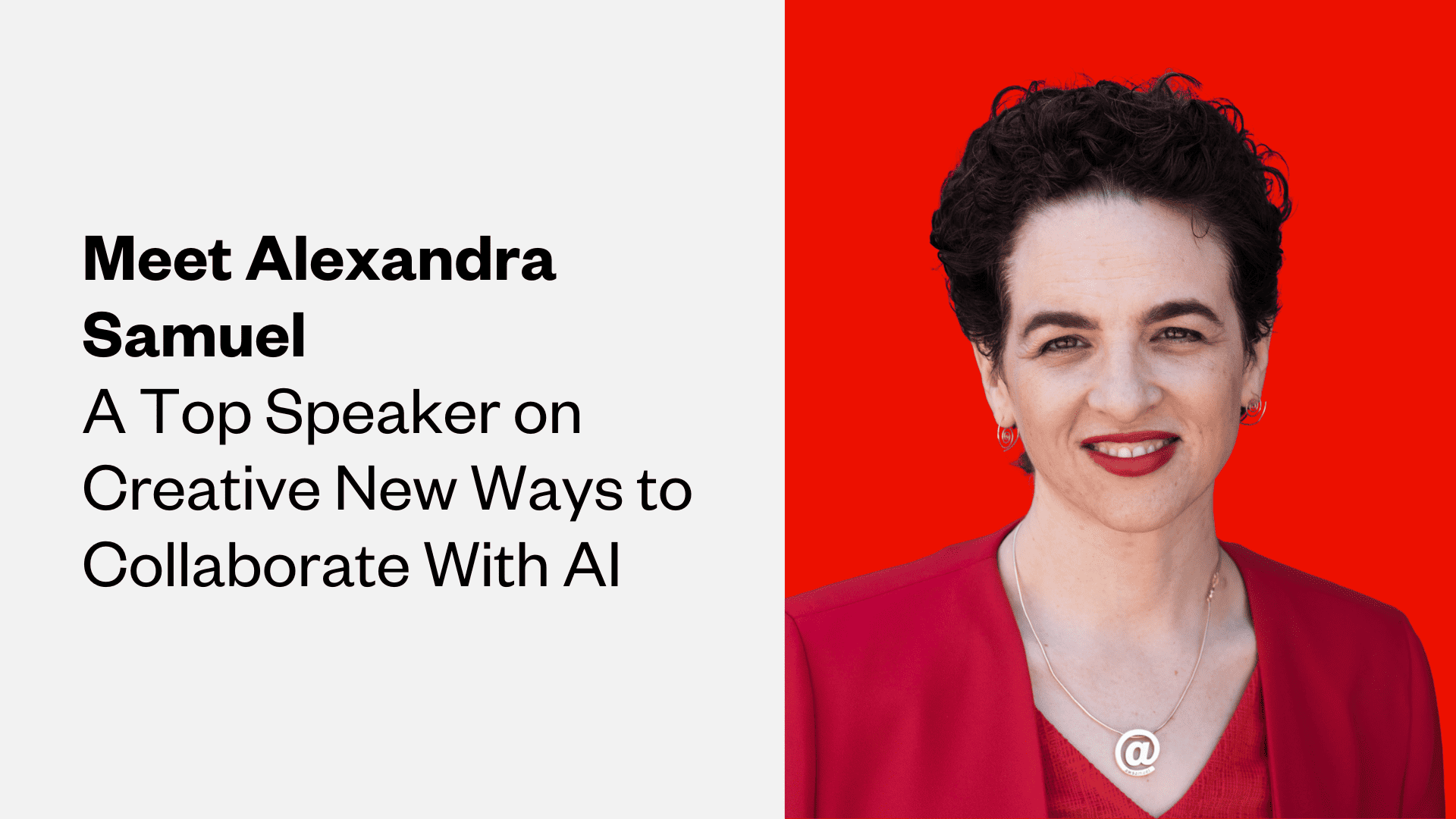
She’s a practitioner, not just a theorist. Alex spent over a year building and working with her own custom AI coach, Viv. She brings real-world, in-the-trenches experience to the stage, sharing insights that can only be learned through deep, personal experimentation.
She translates technology into human strategy. Drawing on her background as a journalist, Alex excels at making the complex dynamics of AI accessible. She moves beyond the technical jargon to focus on the most critical element: how AI is reshaping human interaction and what leaders must do about it.
She delivers actionable frameworks that you can use today. Alex moves beyond the headlines to provide practical tools for individuals and organizations. Her talks feature powerful, memorable strategies that teams can implement immediately to foster creativity within their culture.
What Does Alexandra Samuel Speak About?
Alex moves beyond the hype to address the fundamental human questions of our automated age. She doesn’t just discuss productivity hacks—she decodes the profound impact AI has on our creativity, our collaboration, and our agency. Her talks are built on deep research and personal experience, delivering actionable frameworks for audiences grappling with the future.
Her core topics include:
Collaborating with your AI interviewer
How can we use AI to bypass our “internal editor” and surface truly innovative ideas?
What happens when you stop asking AI for answers and start making it interview you?
How can a simple shift in prompting unlock the tacit knowledge hidden within your team?
Building a corporate culture that resists “AI-solation”
What is the cultural risk when employees default to AI instead of their colleagues?
How do you establish a “human-first default” to protect collaboration and trust?
Why is the friction-free convenience of AI one of the biggest threats to your company’s culture?
Shaping AI (instead of letting it shape you)
How do we shape AI to reflect our organization’s values, not the other way around?
Why is accepting the default settings on AI tools an abdication of leadership?
How can the process of building a custom AI clarify your own strategic intentions?
Alexandra Samuel’s Keynote Topics
The Best Coach You’ll Ever Have: Building an AI Tool to Unlock Your Full Potential
When we’re facing a tough decision, we often look for other people to coach us. But what if the best coach you’ll ever have isn’t a human at all? Tech journalist and frequent Wall Street Journal contributor Alexandra Samuel built an AI coach as a 10-week experiment—and the results taught her more than she could have expected about work, creativity, and what it means to be human.
In this hands-on talk, Alex shares the story of her 10-week experiment building “Viv,” a custom AI coach that helped her navigate a critical career pivot. She argues that the true power of AI lies not in getting it to do your work for you, but in using it to clarify your own values, goals, and strategic intentions—and she moves beyond the story to give you the blueprint for building your own custom AI coach.
Audiences will learn her signature “AI interviewer” method, a technique that forces you to take your “internal editor offline” and surface unfiltered, authentic insights. She introduces practical tools like the “reverse feedback sandwich” designed to stop AI from being a sycophant and instead force it to challenge your assumptions. Whether you need a ruthless strategic critic or a creative muse, Alex provides the specific prompts and frameworks to customize a tool that fits your unique needs.
“If you are engaging with AI, you need to think of it as an imaginative tool, rather than a search engine,” she says. “Entering into this space of imagination and creativity can open up much bigger possibilities than just copy-editing something 12% faster.”
AI-Powered Collaboration: The Future of Teamwork
The rise of AI isn’t just changing how we work as individuals—it’s transforming how we work together. In this practical and engaging talk, Alexandra Samuel shows how leading teams and organizations are using AI to reshape collaboration, communication and innovation. You’ll learn how AI can help break down silos, foster creativity, and ensure every team member’s strengths are utilized to their fullest potential. Alex will share real-world examples of AI-driven collaboration, and provide a roadmap for integrating AI into your own collaborative processes.
In this illuminating session, you’ll discover how to use AI to streamline workflows, enhance communication across distributed teams, and break down organizational silos. You’ll learn strategies for leveraging AI to facilitate more inclusive brainstorming, provide real-time language translation for global teams, and analyze team dynamics for improved performance. Alex offers inspiring case studies of organizations that have successfully integrated AI into their collaborative processes, and you’ll leave with a practical roadmap for transforming your own team’s approach to collaboration.
“AI gives us an unprecedented opportunity to rethink how we work together,” Alex says. “The organizations that thrive will be the ones that harness AI to create more vibrant, engaged and productive teams.”
Re-Imagining AI
What happens when machines think for us? The rapid adoption of ChatGPT and other generative AI tools has raised profound questions about the future of critical thinking, learning and innovation. But AI doesn’t have to be the end of the human story: Instead, it can open a new chapter—once we reckon with how AI transforms our relationship to knowledge, creativity and one another.
Drawing on her AI stories for The Wall Street Journal and Harvard Business Review, Alexandra dismantles the false choice between either uncritically embracing AI’s productivity gains or rejecting it as an existential threat. Instead, she argues for using AI to hone our own human capacities for creativity and critical thinking and provides practical tactics you can use and share.
You’ll gain a new framework for thinking about AI—one that will transform how you approach your own work, your relationships, and ultimately, how you help others navigate this new landscape.
Humanizing Work in the AI Era
AI can boost individual performance, strengthen teams and drive organizational innovation—once we embrace the tactics that ensure AI makes the most of our human talents.
In this engaging talk, journalist and technology researcher Alexandra Samuel shows you how to apply the approaches she covers in her AI stories for The Wall Street Journal and Harvard Business Review. When we use AI to address the chores and frictions that drain our energy and chip away at our relationships, Alex shows, it can become a catalyst for more effective, rewarding and collaborative work.
In this talk, Alex shares specific tactics that deliver on the promise of AI-supported collaboration, so that you leave with a new understanding of AI, and concrete steps to put it into practice.
See Alex in Action
Frequently Asked Questions about Alexandra Samuel
What makes Alexandra Samuel a unique AI speaker? Alex combines her deep research with hands-on practice. She doesn’t just talk about AI in the abstract; she builds with it, lives with it, and shares fascinating, real-world stories and frameworks that are both provocative and immediately applicable.
What is the “AI Interviewer” method? The AI Interviewer is Alex’s core framework for flipping the script on AI. Instead of asking AI for answers, you prompt it to interview you or your team, a technique that surfaces deep knowledge, bypasses social filters, and unlocks a more authentic and powerful form of creativity.
What industries would benefit most from Alexandra Samuel’s keynotes? Leaders in technology, marketing, finance, HR, and any industry focused on innovation, team culture, and future-proofing their workforce will find Alex’s insights essential for navigating the next wave of technological change.
Ready to bring Alexandra Samuel’s essential insights to your next event? Contact us today to check her availability and discuss how her message can be tailored to your audience.
As a tech journalist and author who spent a year building and working with her own custom AI coach, Alexandra Samuel moves beyond theory into practice. Her data-informed, human-centric frameworks are perfect for organizations looking to harness AI to build more creative, collaborative, and intentional teams.
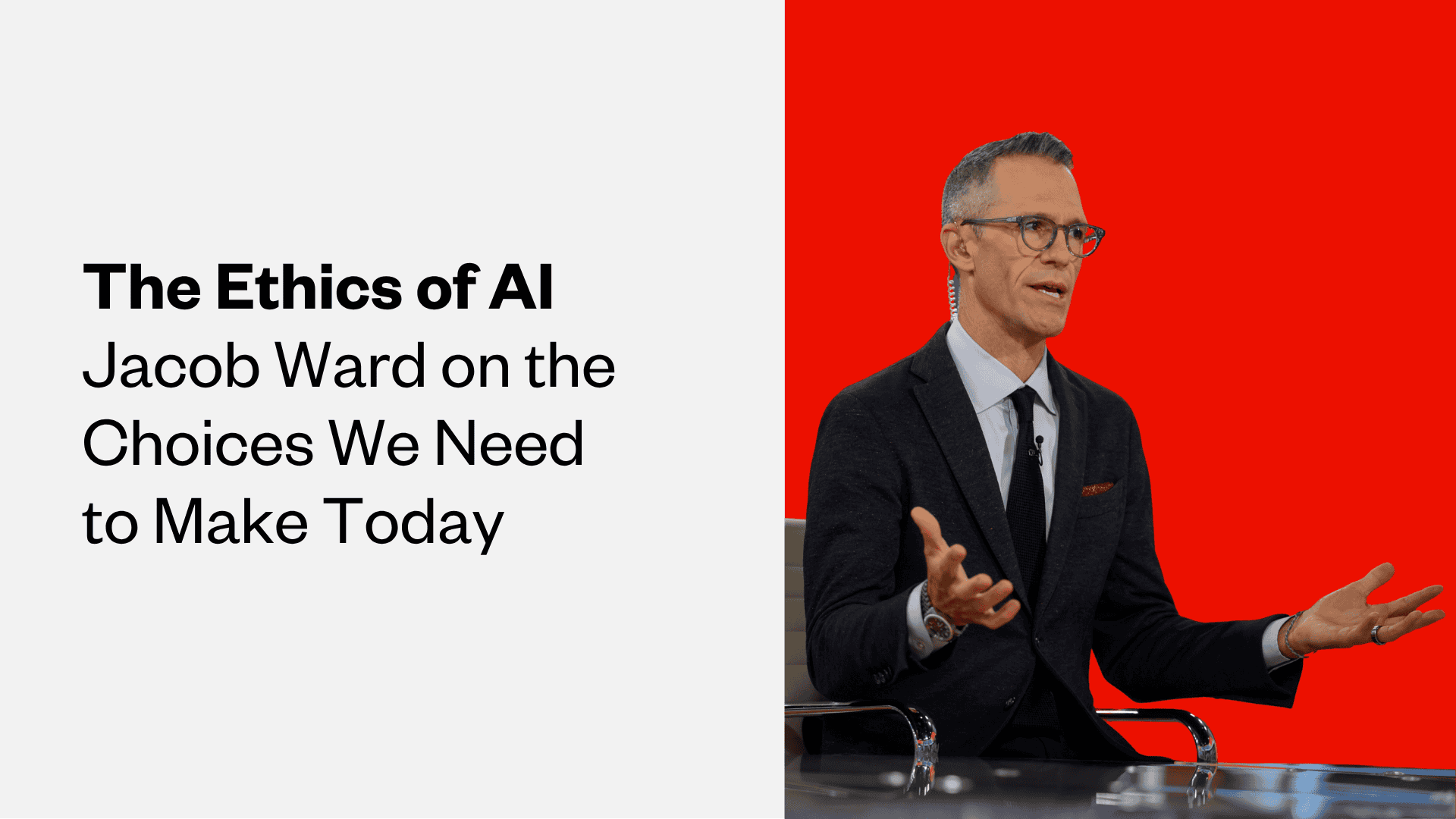
A former NBC News technology correspondent and author of The Loop, Jacob Ward focuses on the hidden impact of AI on human decision-making. His talks are ideal for leaders who need to understand the psychological and ethical dimensions of technology to build more responsible and resilient organizations.
Stephanie Mehta, former editor in chief of Fast Company and now CEO of that magazine’s parent company, offers a unique, high-level perspective on how AI is reshaping the landscape of corporate leadership, offering lessons on change and leading by example. “We’re just beginning to scratch the surface,” she says.
A serial entrepreneur and professor of marketing at NYU’s Stern School of Business, Scott Galloway is known for his no-fluff, data-rich analysis of brand strategy and market dynamics in the digital age. His style is ideal for audiences who want a brutally honest take on what it takes to win in the current tech landscape.
A Deeper Dive: Why Alexandra Samuel Might Be the Alternative You’re Looking For
For organizations seeking to move beyond commentary and into action, Alexandra Samuel offers a unique and essential perspective. Her work is defined by one core question: “How can this tool strengthen and support my human relationships?” This focus on the human and cultural side of AI makes her a powerful alternative for businesses grappling with the real-world implications of our automated future.
From Practitioner to Guide
While many tech journalists report on AI from the outside, Alex’s insights come from the inside out. Her year-long experiment in building her AI coach, Viv, gave her a practitioner’s understanding of the psychological and strategic nuances of working with AI. She shares lessons learned from the front lines of human-machine collaboration, offering a perspective that is both deeply personal and universally applicable.
A Focus on Actionable Frameworks for Culture
Where some speakers diagnose the problem, Alex provides the cure. She moves beyond the headlines to deliver practical tools that leaders can implement immediately. Her talks feature powerful concepts like:
The “AI Interviewer”: A technique that flips the script on AI, using it to interview your team to surface their hidden, unarticulated genius rather than asking it for generic answers.
Curing “AI-solation”: A framework for establishing a “human-first default” to ensure that the convenience of AI doesn’t erode the collaborative fabric of your company’s culture.
A Message of Intentionality and Human Agency
Ultimately, Alex’s message is one of empowerment. She argues that the future of AI in our organizations is not pre-ordained but is being designed right now by the choices leaders make. She challenges audiences to become the chief architects of their company’s relationship with technology, asking them to choose their goals first and then shape the tools to meet them. This is the call to action that transforms a keynote from a passive listening session into a catalyst for lasting cultural change.
The Quick-Scan Comparison
To help you make the best choice, here is a simple breakdown of these speakers’ core offerings.
Speaker
Core Topic
Speaking Style
Best For…
Kara Swisher
Insider tech commentary & interviews
Provocative, Direct
High-level industry perspective
Alexandra Samuel
The human & cultural impact of AI
Experiential, Collaborative, Pragmatic
Building creative, human-centric AI cultures
Jacob Ward
AI’s impact on human behavior
Engaging, Forward-Looking
Driving responsible innovation
Stephanie Mehta
How CEOs and leaders can win at AI
High-Level, Compelling
Strategic foresight & planning
Scott Galloway
Digital brand & market strategy
Unfiltered, Data-Rich
Understanding competitive dynamics
Choosing Your Speaker
Choosing the right tech speaker means finding a voice that not only explains the present but also equips your team to build a better future. While there are many excellent commentators on the power dynamics of Silicon Valley, a speaker like Alexandra Samuel provides the actionable, human-centric frameworks needed to navigate the next wave of technological change with intention and creativity.
Ready to see how Alexandra Samuel can prepare your team for the future? Learn more and watch her talks here, then get in touch to book her, or any of our other top speakers, to speak at your event.
He Predicted the AI Revolution: Jacob’s book, The Loop, outlined the dynamics of the commercial AI mania nearly a year before ChatGPT launched, giving him the unique credibility of having been right about what’s next. He saw the future coming and can help your organization prepare for it.
He Translates Complexity into Clarity: Drawing on his experience as tech correspondent at NBC News and as a contributor to The New York Times, WIRED, and more, Jacob excels at making complex topics like AI ethics and science accessible and relevant to any audience, from the C-suite to the front lines.
He Delivers Actionable Frameworks, Not Just Theory: Jacob moves beyond journalism to provide practical tools that organizations can implement immediately. His talks feature concepts like the “Super Villain test,” a powerful exercise that helps companies build responsible innovation strategies and avoid future crises.
What Does Jacob Ward Speak About?
Jacob moves beyond the headlines to address the fundamental questions of our automated age. He doesn’t just report on the latest gadget or app; he decodes the profound impact technology has on our choices, our businesses, and our society. His talks are built on years of research and reporting, delivering actionable frameworks for audiences grappling with the future.
His core topics include:
The Loop: AI’s Hidden Impact on Human Decision-Making
How do algorithms unconsciously shape the choices our customers and employees make?
What are the hidden cognitive biases being created by our reliance on AI?
How can we foster a culture of mindful, human-centric decision-making?
Responsible Innovation: A Framework for Corporate Leaders
What is the ethics of artificial intelligence in a business context?
How can we assess the risks of a new technology before it damages our brand?
Why is the allure of convenience one of the biggest dangers of AI for corporate strategy?
The Future of Work: Navigating Talent in the Automated Age
What is the true impact of automation on employee satisfaction and retention?
How do we create career paths when the first rungs of the ladder are gone?
What skills become more valuable in a world of AI, and how do we cultivate them?
Jacob Ward’s Keynote Topics
The Pitfalls of “AI Psychosis”: And How Your Company Can Avoid It
The temptation in our AI age is to jump right in. Faster emails! Lightning-quick research! Productivity gains in every department! But the dirty secret of AI is that deploying it the wrong way can cut your people off at the knees, wiping out their skills and their job satisfaction without adding a dollar to your bottom line. “AI can make your best people extraordinarily productive… and miserable enough to quit their jobs,” says Jacob Ward.
How do you avoid this? By understanding the nature of AI psychosis.
In this rapid-fire, high-energy presentation, this long-time technology journalist explains the psychological pitfalls and breakthrough opportunities of AI, drawing from his groundbreaking 2022 book The Loop, which predicted our AI moment and the mania it has inspired. He offers practical frameworks that leaders can use to seize the actual benefits of AI, and gives audiences the tools to understand the true role of this technology and reap enormous rewards.
See Jacob in Action
Frequently Asked Questions about Jacob Ward
What makes Jacob Ward a unique technology speaker? Jacob combines his deep journalistic background with a focus on the human sciences. He doesn’t just talk about gadgets; he explains the profound impact of technology on human behavior, decision-making, and ethics, offering actionable frameworks for business leaders.
What is Jacob Ward’s book The Loop about?The Loop explores how AI is learning to predict and influence our unconscious choices, creating a feedback loop that can limit our agency. It predicted the dynamics of the current AI mania and serves as the foundation for his keynotes on AI ethics.
What industries would benefit most from Jacob Ward’s keynotes? Leaders in finance, healthcare, technology, marketing, and any industry grappling with digital transformation will find Jacob’s insights invaluable for future-proofing their organizations and making responsible decisions.
Ready to bring Jacob Ward’s essential insights to your next event? Contact us today to check his availability and discuss how his message can be tailored to your audience.
As a professor at NYU’s Stern School of Business and CEO of the Future Today Institute, Amy Webb provides a data-driven, academic look at long-term tech trends. Her methodical approach is best for audiences who need rigorous, quantitative strategic foresight to inform their long-range planning.
2. Kara Swisher: The Media Pundit
Kara Swisher is an icon of tech journalism, known for her unfiltered, insider’s take on the power players shaping Silicon Valley. Her provocative and direct style is ideal for an audience looking for high-level industry perspective and candid commentary on the week’s biggest headlines.
3. Alexandra Samuel: The AI Workplace Expert
Tech journalist and author Alexandra Samuel explores the practical challenges and opportunities of the modern digital workplace. Her data-informed advice is perfect for organizations looking to build more productive, engaged, and effective teams by mastering the tools of digital collaboration.
4. Jacob Ward: The Far-Ranging Tech Journalist
For organizations seeking to move beyond reporting and into preparation, Jacob Ward offers a unique and essential perspective. As a former NBC News technology correspondent and author of The Loop, which predicted the current commercial AI mania nearly a year before its arrival, Jacob’s work is defined by one core question: “What is technology trying to tell us about ourselves?”
This focus on the human side of technology makes him a powerful alternative for businesses grappling with the real-world implications of AI and automation.
A Focus on Actionable Frameworks, Not Just Reporting
While many tech journalists report on what happened, Jacob’s focus is on what’s next and what to do about it. He moves beyond the headlines to explore the underlying forces at play, explaining that he was never just a technology correspondent, but rather a “democracy correspondent or capitalism correspondent.” This approach helps leaders understand the commercial and ethical pressures driving innovation.
For corporate audiences, he provides tools like the “Super Villain test,” a workshop where he asks leaders: “If you were going to try to be manipulative and dangerous with this, what would it look like?” This framework helps companies identify risks and build processes to avoid becoming the next cautionary tale.
Translating Future Tech for Today’s Business
Jacob excels at making complex topics accessible to a broad audience—a skill he honed at NBC News. He avoids jargon to deliver clear, compelling insights into how AI is already shaping our choices. His central thesis in The Loop explains how AI-powered systems can create a “downward spiral of shrinking choices,” a critical concept for any business that relies on consumer behavior.
A Message of Corporate Responsibility and Agency
Ultimately, Jacob’s message is one of empowerment. He believes the future of technology is not pre-ordained but is being decided now by the people in the room. He challenges audiences by reminding them, “This innovation is absolutely in the hands of you. You are experimenting with live ammunition, and it’s important to understand the responsibility that you carry.” This is the call to action that transforms a keynote from a passive listening session into a catalyst for change.
The Quick-Scan Comparison
To help you make the best choice, here is a simple breakdown of these speakers’ core offerings.
Driving responsible innovation & business outcomes
Conclusion: Choosing Your Speaker
Choosing the right tech speaker means finding a voice that not only informs but also inspires meaningful action. While there are many excellent storytellers looking back at the history of Silicon Valley, a speaker like Jacob Ward provides the actionable frameworks needed to navigate the next wave of technological change responsibly.
Ready to see how Jacob Ward can prepare your team for the future? Learn more and watch his talks here, then get in touch to book him to speak at your event.
When covering technology for NBC News, Jacob and his team had a rule: “no dark typists and no ones and zeros.” Instead of leaning on tired stereotypes of shadowy hackers, they focused on the real-world impact. This approach revealed that the true dangers of AI and technology are rarely about rogue robots; they are about flawed human systems, particularly democracy and capitalism.
“You’re either talking about people’s free and open access to a shared pool of accurate information… or you’re talking about the commercial pressures that push people to adopt innovations in sometimes rushed and unethical ways,” Jacob says.
He points to the debate over self-driving cars. A typical story might celebrate the novelty of a driverless ride. Jacob’s approach asks a more fundamental question: Why are we trying to do away with taxi drivers? This reveals a deeper truth: the technology is often a solution in search of a problem, driven by market pressures that overlook profound social consequences.
How AI Influences Human Decision-Making
Jacob’s central thesis, articulated in his book The Loop, is that AI-powered systems are becoming dangerously adept at decoding and exploiting our ancient, instinctive decision-making circuits. This creates a feedback loop:
Snap Judgments: Our brains use ancient, pattern-recognizing shortcuts to make quick decisions.
Behavioral Analysis: AI systems analyze our behavior to predict the choices we’re most likely to make.
Limited Options: These systems then present us with a narrow set of options designed to guide us toward a predictable, profitable outcome.
The result is a “downward spiral of shrinking choices.” As we hand over more of our decision-making to these convenient systems, we risk losing the very ability to choose for ourselves. Jacob paints a stark picture of the end state: “We’re just drinking weird smoothies for our dinner, drinking Soylent and wearing beige, and we don’t know how to talk to our spouses anymore.” The efficiency of the algorithm strips away the messy, inefficient, but essential parts of being human.
The Case for Inefficiency
The primary allure of AI is convenience. But Jacob cautions against embracing it uncritically, sharing a powerful concept from a federal judge: “weak perfection.”
Weak perfection is the idea that you could, theoretically, make a life-altering decision—like entering a guilty plea—as easy as swiping left or right on a phone. It’s perfectly convenient but disastrously weak. The justice system, in contrast, is designed to be deliberately inefficient. It forces you to show up in person, consult with counsel, and engage your higher, more rational cognitive functions.
“Our creativity, our rationality, our caution, our sense of equality—all of that is exhausting to engage,” Jacob argues. “There are certain human functions that we’re going to want to keep full of friction so that we keep engaging our brains in it.”
This is the core ethical challenge: society must deliberately preserve its inefficiencies to protect the best parts of being human.
How to Break the Loop
While regulation and cultural pushback (like the younger generation’s term “clanker” for people over-reliant on AI) will play a role, Jacob insists that the responsibility lies with the leaders implementing this technology today.
“This innovation is absolutely in the hands of you in the audience,” he says. “You are experimenting with live ammunition, and it’s important to understand the responsibility that you carry.”
For companies grappling with AI implementation, he offers a practical starting point he calls the “Super Villain test.”
He asks leadership teams: “If you became hell-bent on doing something bad with what you have created here… what would it look like?” By identifying the potential for misuse, companies can build processes to prevent it, protecting both society and their own reputation.
“Like Adolescents With a Car”
Ultimately, the future of AI isn’t about the technology itself, but about the choices we make. Will we use it to amplify the best, most thoughtful parts of our humanity? Or will we allow it to cater to our most primitive, easily manipulated instincts? As Jacob concludes, we are like “adolescents with a car right now,” and it’s time we learned how to drive.
These speakers, often from major publications like the New York Times or tech-focused media, excel at telling the deep, investigative stories behind the biggest tech sagas. They are masters of narrative and context, pulling back the curtain on the power players and corporate dramas that shape Silicon Valley.
Karen Hao: An award-winning journalist and author of Empire of AI, this TIME100 AI honoree is renowned for her groundbreaking reporting on the societal impact of artificial intelligence. She brings clarity and deep insight to her insider investigation of OpenAI and the story of one of the most consequential technologies of our time.
Mike Isaac: As a veteran technology reporter for The New York Times and the bestselling author of Super Pumped, Mike provides a gripping, behind-the-scenes look at the scandals and successes of companies like Uber.
Best For: Audiences that need to understand the history, power dynamics, and culture of Silicon Valley.
Archetype 2: The Big-Picture Thinker
Data-driven and forward-looking, these speakers connect the dots between emerging technologies and broad societal trends. They analyze everything from economics and climate to consumer behavior, providing audiences with a clear-eyed view of the forces that will shape the coming decades.
Derek Thompson: The #1 New York Times bestselling co-author of Abundance (with Ezra Klein), Derek is an expert on the future of intelligence, work, and how technology overlaps with our political landscape. He brings clarity to the complex economic and cultural forces driving innovation.
Kara Swisher: An icon of the industry, Kara is known for her unfiltered, insider’s take on the power players shaping the tech world. Her provocative style delivers candid commentary on the industry’s most urgent headlines.
Best For: Leadership and strategy teams focused on long-range planning and understanding the macroeconomic and cultural shifts on the horizon.
Archetype 3: The Tech Humanist
The most critical questions in tech today aren’t about the what, but the why. Tech Humanists explore the intersection of technology and human behavior, focusing on the ethical implications and societal impact of AI and automation. They don’t just explain the technology; they explain what it means for us.
Daron Acemoglu: One of the world’s most cited economists and the co-author of Power and Progress, this Nobel Prize winner provides a powerful framework for understanding the relationship between technology, power, and shared prosperity. He challenges the assumption that technological advancement automatically benefits all of society, offering a new look at the choices we must make to ensure innovation creates a more democratic future.
Jacob Ward: As a former NBC News technology correspondent and author of The Loop, which predicted the current AI mania nearly a year before the arrival of ChatGPT, Jacob defines his work by one core question: “What is technology trying to tell us about ourselves?” He provides actionable frameworks for navigating the complex ethical landscape of AI.
Best For: Forward-thinking organizations looking to build a responsible, human-centric approach to innovation and understand the future risks and opportunities of AI.
Archetype 4: The Digital Sociologist
These thinkers examine how technology is rewiring our social and political landscape. They tackle urgent issues like surveillance capitalism, digital manipulation, and the future of work in the digital age, providing insight on how our technology is changing how we work, live, and create.
Shoshana Zuboff: A Harvard Business School professor emerita and the acclaimed author of The Age of Surveillance Capitalism, Shoshana is the originator of the term “surveillance capitalism.” Her seminal work provides the foundational analysis of how personal data is used to predict and shape human behavior for profit.
Shalini Kantayya: As the director of the acclaimed documentaries Coded Bias and TikTok, Boom, Shalini investigates the powerful human consequences of algorithmic bias. She highlights how AI can perpetuate inequality and tells the urgent story of the activists and researchers fighting to ensure our civil rights are protected in an increasingly automated world.
Best For: Audiences grappling with big-picture societal challenges, policy implications, and the role of technology in a modern democracy.
Archetype 5: The Transformation Strategist
These speakers focus on the practical application of technology within our economy and workplaces. They provide data-informed advice on everything from blockchain and the future of money to building productive and creative hybrid teams.
Alexandra Samuel: A hands-on expert on the future of work, Alexandra is an award-winning technology journalist who helps organizations navigate the hybrid workplace, collaborate joyfully with AI, and build intentional digital structures that support connection and creativity.
Michael Casey: A leading authority on the future of money and digital transformation, Mike has deep expertise in blockchain and cryptocurrency. The former Wall Street Journal columnist helps organizations understand how technology is reshaping economic power today.
Best For: Business audiences seeking practical strategies for adapting to digital transformation, whether in finance, team collaboration, or workplace culture.
How to Choose the Right Speaker: 3 Key Questions
What is Your Event’s Primary Goal? Are you looking for a history lesson, a forecast of the future, or an actionable plan for today?
What Does Your Audience Need? Do they need high-level inspiration, deep technical knowledge, or practical workplace advice?
Do You Need a Rear-View Mirror or a Windshield? Do you need to understand past events to make sense of the present, or do you need a guide to navigate the road ahead?
The Tech Speaker Archetypes at a Glance
Speaker Archetype
Core Focus
Delivers…
Ideal Event Goal
The Journalist
The Past (Investigative Stories)
Context & Narrative
Understanding Industry History
The Futurist
The Future (Data-Driven Trends)
Foresight & Planning
Strategic Long-Range Planning
The Humanist
The “Why” (Human Impact & Ethics)
Responsibility & Frameworks
Driving Responsible Innovation
The Sociologist
The “Power” (Political Impact)
Critical Perspective & Awareness
Grappling with Societal Change
The Strategist
The “How” (Practical Application)
Productivity & Adaptation
Improving Business Operations
Conclusion
The right tech speaker doesn’t just talk about the future; they equip you to build it. By matching the speaker archetype to your event’s goals, you can ensure a session that resonates long after the applause.
This means that it’s not simply nice to have fun at work. It’s actually better for our bottom line. The pervasive idea that “work is called work for a reason,” implying it must be hard or unpleasant, is a myth. We’re not paid because work is inherently painful, Bree says—we’re paid because we create value that others want. And there’s an intrinsic joy to work: using our skills, building things with others, and leaving the world better than we found it. When we foster this vitality, we’re not just creating happier employees; we’re unlocking significant gains in efficiency, innovation, and profitability.
Reason 2: Fun lets us be our better selves.
Beyond the numbers, there’s a profound human reason to prioritize fun: our authenticity. Bree argues that performative professionalism gets in the way of psychological safety. The expectation to don a “business mask”—to be palatable, presentable, and to conform to rigid, formal norms—stifles our human expression and creativity. When we feel the need to perform in order to be taken seriously, she says, we’re not thinking about “Am I having a good day? Is this day worthy of my life?” Instead, we’re consumed by the need to show up well.
This isn’t just personally taxing. It’s bad for business—because people aren’t sharing their “best, bravest ideas.” It’s hard to truly contribute if we don’t first feel like ourselves.
Ultimately, the most compelling case for integrating fun into work is existential: “We all are going to run out of Mondays,” Bree says. “They are not a renewable resource.” As leaders, when we consider our team members, the goal isn’t just to extract maximum business value. It’s to be a good steward of your own days and your team members’ days, ensuring that they’re not just fun, but a good way to spend your time on the planet.
1 way to make work fun: The “Do-Nothing Day”
So, how do we operationalize this? While sweeping structural changes like a four-day work week are certainly on the table, managers and team leaders can start much smaller. One powerful tactic Bree champions is the “Do-Nothing Day.”
“We are not wired to do our most expansive creative thinking in 30 minute blocks,” Bree says. Great ideas often emerge when we’re doing nothing—gardening, or taking a shower—because these are the few times our brains are truly free. So why not do nothing… together?
To foster this creativity, Bree takes executive teams away from the office for an unstructured offsite. “You can think of it as a Do-Nothing Day but a Think-Everything Day,” she explains. It’s a dedicated space, away from the pressure cooker of back-to-back meetings, to think, brainstorm, and just chat about the business. To generate brilliant ideas—ideas that people pay us for—we need some amount of slack in the system. “If our competitive advantage is going to be to play, to dream, to think compassionately about our customers or clients, we need some time to mess up. We need some time to play. We need some time to kick around ideas,” Bree says. The Do-Nothing Day allows for expansive, creative thought, ensuring that our uniquely human capabilities are fully leveraged, especially as AI handles more of the operational, 24/7 tasks.
The human imperative of fun
Bree’s call to inject fun into work is a business strategy and a human right. From driving productivity to fostering authenticity, fun is a cornerstone of a thriving, innovative workplace. By embracing concepts like the “Do-Nothing Day” and challenging ingrained notions of professionalism and pain, leaders can empower their teams—and themselves—to find vitality and purpose in their daily work.
The call to have fun at work is not a castle in the sky, but an achievable reality we have the agency to create, starting today.
Want more from Bree?
Watch her Lavin Voices episode below, and contact us to book her to speak at your event!
Our greatest limitations often reside not in our capabilities, but in our minds. “The reason you slow in running is that your body wants you to maintain homeostasis,” Nick says. “Your brain triggers a pain response, and then that is what makes you slow.” Our subconscious brain, wired for comfort and predictability, can prematurely signal “pain” when conditions get difficult, making us halt before true physiological limits are met.
And this isn’t just about running. It offers a blueprint for executive decision-making. Leaders must embrace strategic discomfort, Nick says: “You should sometimes try to go too fast and do things that seem impossible.” This isn’t recklessness—it’s a calculated push against mental barriers. “The way you get better is by going at an uncomfortable speed.” For a CEO, this might mean increasing sales targets, compressing project timelines, or exploring radically new market strategies. It’s in these moments of perceived impossibility that true breakthroughs are engineered.
2. Think you’ve hit your peak? Think again.
The traditional view of peak performance often suggests a linear ascent followed by an inevitable decline. But Nick’s own running narrative defies this, revealing a path of “rolling peaks.”
“My slowest times are at my athletic peak,” he says. “At age 30, I get good, and I stay basically constant until I’m 43 and then I get massively better.” This non-linear trajectory is a powerful metaphor for executive careers. Success isn’t about reaching a singular summit and then gracefully descending; it’s about continuous engagement, learning, and adaptation.
“Age is a moving sidewalk going backwards, but wisdom is a moving sidewalk going forwards,” Nick says. For leaders, this means actively seeking out and applying new insights to outpace the challenges that come with an evolving market and a longer career. The secret to sustained excellence, he argues, is consistent commitment: “You don’t stop running because you get old. You get old because you stop running. If you stay focused, you can learn enough to compensate.” CEOs must remain perpetual students of their industry, consistently acquiring “wisdom” to compensate for shifting landscapes and lead with enduring relevance.
3. Get a hobby. It’ll make you better.
In the demanding world of the C-suite, personal pursuits are often viewed as necessary breaks or even distractions. But Nick, a CEO, ultrarunner, and former editor-in-chief, offers a radical reframe: ambitious hobbies can be “additive” to professional success, not merely a counterbalance. Running, for him, “gives me a chance to relax. I fit it in in very efficient ways, and I often think through big problems when I run.” His personal passion is a catalyst for strategic thought and a personal laboratory for resilience.
This integrated approach extends to how leaders foster talent. Nick contrasts a coach who demanded “all in” dedication to running, which led to burnout and failure, with a later coach who helped him fit his hobby into a more ambitious, complicated life. This latter approach “unlocked this talent” because it acknowledged and integrated his multifaceted ambitions.
For CEOs, this means fostering a holistic leadership approach, both for themselves and their teams. By embracing challenging personal passions, executives can cultivate mental clarity, enhance problem-solving, and develop a deeper understanding of dedication and discipline. It’s about designing a life where professional ambition and personal fulfillment are not in conflict, but are interwoven, each fueling the other for greater overall impact.
Nick’s journey from weekend jogger to ultrarunning record-holder, all while leading major media companies, offers a clear blueprint for modern CEOs. Embrace strategic discomfort to push past mental barriers, leverage continuous learning and wisdom to sustain growth through “rolling peaks,” and integrate ambitious personal hobbies as powerful “additive advantages” for a more effective, innovative, and fulfilling leadership journey. The path to breakthrough leadership, much like the 50 km run, is a test of will, adaptability, and the profound connection between mind, body, and enduring purpose.
Want more from Nick?
Watch his Lavin Voices episode below, and get in touch to book him to speak at your event!
One reason we hesitate to play, Cas explains, is the belief that “we need to be productive or efficient all the time.” There’s a common misconception that engaging in social connections or activities without a direct, measurable output is “less productive.” But, as humans, we are intrinsically wired to thrive on connection and moments of genuine, unburdened engagement.
Cas hesitates to say play is productive in the conventional sense. However, she argues that “if we understand the value of play, then we’ll understand that it is productive: in making us feel good and be human and connect with the people that are in the space around us.” When we allow ourselves these often-overlooked moments—a spontaneous conversation, a beloved hobby, or simply rearranging our personal space—we fulfill a deep-seated need. Rethinking our definition of productivity is key to unlocking our wellbeing.
2. Play boosts our creativity.
Beyond cultivating personal well-being, play can be a powerful engine for creativity and innovative problem-solving. Studies have showed that rats in enriched environments who were given opportunities to play developed brains faster than rats who weren’t given the same opportunities. Notably, college students who engaged in just five minutes of play with puzzles before a challenging problem higher on problem-solving—and found the problems more engaging too.
Play encourages us to explore diverse outcomes, Cas says, making us “much more available to see opportunity and failure.” It is within the challenge, within the “friction,” that our cognitive faculties are sparked, leading to a deeper involvement in discovering novel solutions.
3. Play boosts our connection.
Perhaps most important in our complex world, play stands as an unparalleled tool for fostering genuine connection and mutual understanding. “I don’t think people are super happy right now,” Cas says. “We’re certainly not getting along. But if we can play together, we can live together.”
Consider the dynamic of a casual pickup basketball game. Players might be competitive, even verbally sparring, yet they walk away as friends. They have engaged, coexisted, navigated minor conflicts, and fostered respect within shared rules of play. Whether through formal games or the organic process of making up rules on the fly, play teaches negotiation, compromise, and the invaluable ability to “figure it out” collaboratively. In these shared experiences, we learn that “there can be conflict and we can come out of it and keep playing together,” Cas says.
It’s time for us to rethink play: not as a trivial pastime or a diversion, but as a human imperative that boosts personal well-being, ignites creative problem-solving, and strengthens our communities. We can start by integrating intentional moments of play into our lives—starting today!
Want more from Cas?
Watch her Lavin Voices episode below, and then get in touch to book her to speak at your event!
Just like visible markets allocate goods and services, your time and attention are constantly being allocated by a complex interplay of requests, defaults and unexamined rules. Every email, every meeting invitation, every “quick question” is a bid for a piece of your limited bandwidth. Acknowledging this scarcity is the first step towards thoughtful design.
Judd says, “Anyone at a firm is the designer of the market for their own time and attention.” The way you structure your day, respond to requests and set boundaries inherently creates a set of “hidden market” rules. The question, then, is whether these rules are serving you and your strategic objectives… or not.
2. Rethink the first come, first served mentality.
Many leaders inadvertently apply a “first in time, first in right” policy to their calendars, Judd says: whoever emails, calls, or books a meeting first gets first dibs on our time. But this leaves us vulnerable to wasting our time on work that feels urgent, but isn’t actually important.
Consider that recurring meeting you’ve had on Tuesday at 11 a.m. for the past two years. Is it always the most productive use of that slot? Probably not, Judd says. But these ingrained calendar defaults, once set, can persist regardless of how useful they are, consuming valuable time that could be better spent on more pressing strategic initiatives.
3. Move beyond reactivity with the “3 E’s” of time management.
Every hidden market runs on the 3 E’s, Judd says: equity, efficiency and ease.
Let’s apply this framework to something as ubiquitous as email management. Instead of constantly monitoring your inbox, you can establish clear protocols so “market participants” (people trying to get your attention) know when they can expect a response from you.
Try letting people know that you’re only going to check email at 10 a.m. and 4 p.m. today. “Then they’re not expecting a response in the middle, and they can optimize against the market rules that you create,” Judd says. This transparency manages expectations, reduces anxiety for those waiting for responses, and allows you to focus effectively.
And the benefits extend beyond personal productivity. They empower your team to optimize their interactions with you, leading to a better experience for everyone involved. As Judd says, “We can be thoughtful about the rules that we establish so that we have a good working experience while still balancing their needs against ours.”
Reclaim your time.
By embracing the idea of your calendar as a hidden market, you move from merely reacting to external demands to proactively designing your personal resource market. This means consciously evaluating meeting requests, setting clear communication boundaries and prioritizing your strategic tasks. You can ensure that your time and attention are deployed to achieve your biggest goals—you just need to understand the market and design it thoughtfully.
Want to hear more from Judd?
The hidden market for your time and attention is just one of many that leaders face at work. Interested in booking Judd Kessler to speak on hidden markets at your next event? Contact us today to learn more!
1. He was a bookworm who mixed Taoism with American self-help
Bruce Lee moved to Seattle in his 20s—“and everyone in their 20s is searching for something,” says Jeff Chang. Seattle, with its segregated communities of poor white people, Black people, Latinx people, and especially Japanese-Americans, taught him that being American meant being for the underdog. But it also gave him access to American self-help literature: Napoleon Hill’s Think and Grow Rich, the doctrine of positive thinking, the whole idea that you can make yourself whoever you want to be.
“He finds, in these books, an encouragement: to pull himself up by his own bootstraps and make something of himself. And so he creates this really interesting self philosophy that mixes up Zen, Buddhism, Taoism and American self-help doctrines,” Jeff explains in this week’s episode of our podcast, Lavin Voices. It’s a uniquely American move: taking Eastern philosophy and Western can-do optimism and creating something entirely new.
That famous Bruce Lee quote about being like water? That’s ancient Taoism. But the drive to “be self-reliant,” to believe you can will yourself into greatness? That’s pure Emerson. Bruce synthesized both into a personal philosophy of self-actualization that still resonates today. Athletes like LeBron James and Klay Thompson quote him. Protesters in Hong Kong and Barcelona paint him on walls. His philosophy transcends borders—because it was always borderless.
2. War shaped his entire life
Bruce Lee nearly died as a child during WWII. “Bruce was deeply shaped by war,” Jeff says. “He nearly starved to death as a child in war-torn, Japanese-occupied Hong Kong.”
And the fighting didn’t end when Japan surrendered. When Mao won the Chinese Civil War in 1949, refugees poured into Hong Kong from all over China—and they brought their regional fighting styles with them. Suddenly you had this massive youth population, packed into a small space, with different kung fu traditions colliding. A street fighting culture exploded.
That’s where Bruce learned to actually fight. Not in some ancient monastery, but in the chaotic, improvised fight culture of post-war Hong Kong. “There’s a fight culture that develops,” Jeff explains, “and that’s the fight culture in which Bruce becomes a martial artist for the first time.”
Later, when Bruce came to America and enrolled in college, he was automatically put into the Reserve Officers’ Training Corps—preparing to potentially fight in Korea or Vietnam, against people who looked more like him than the white Americans who surrounded him. That experience of being seen as foreign, as other, is inseparable from why he fought so hard for representation and why his image still resonates with anyone who’s ever felt like an outsider.
3. He died too young—but in doing so, became a symbol of solidarity
Here’s what most people miss about Bruce Lee: the journey isn’t just from weakness to strength. It’s from self-defense to representation to solidarity.
Jeff traces a clear evolution in Asian American history, one that Bruce’s life and legacy embodies perfectly. “When violence happens to us, it turns us into Asian Americans—because the notion of Asian America affords us a sense of solidarity,” Jeff says. “Self defense leads us to demanding a seat at the table, right? But the seat at the table is not sufficient for us to all be able to feel like we’re going to be safe on the streets, so that’s what solidarity is all about.”
Bruce Lee’s image has become “infinitely flexible,” Jeff says—you can project almost anything onto that iconic stance. He’s been a hip-hop DJ in memes, a symbol of ethnic unity in the Balkans, a revolutionary icon in Catalonia’s independence movement. During the pandemic, when violence against Asian Americans surged, his image reappeared on murals across Chinatowns in America. Not as a call to violence, but as a reminder: we defend ourselves, we demand to be seen, and then we build solidarity with others fighting the same fight.
“It’s ultimately about us being able to be seen and recognized, so that people come to our aid and we come to other people’s aid,” Jeff explains. “That’s the heroic part of it—this leap from representation into solidarity.”
That’s why Bruce Lee still matters in 2025. Not because he could do a one-inch punch, but because his image gives people permission to imagine that things could be better than they are. “In that sense, he’s a vessel,” Jeff says. “And we’re the water.”