The Ritual Effect, by Michael Norton
Recommended by Alison Wood Brooks, Harvard Business School professor and author of TALK
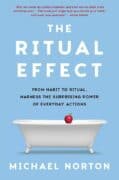 In The Ritual Effect, Lavin Exclusive Speaker and Harvard Business School behavioral scientist Michael Norton makes the case that meaning doesn’t require dramatic life changes—it can be built into everyday actions. Drawing on a decade of research, Michael shows how ordinary habits become powerful rituals when performed with intention, transforming routine behaviors into sources of productivity, connection, resilience, and joy. For leaders, the insight is practical and hopeful: by redesigning how teams meet, celebrate, and change, organizations can foster belonging and motivation in simple ways.
After the Spike, by Dean Spears and Michael Geruso
Recommended by Katy Milkman, bestselling author of How to Change and host of the Choiceology podcast
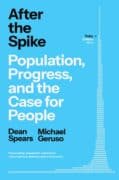 In After the Spike, economists Dean Spears and Michael Geruso confront a counterintuitive global crisis: not overpopulation, but rapid depopulation. Drawing on rigorous data, striking visual evidence, and careful economic analysis, they show why falling birth rates threaten long-term prosperity, equity, and innovation—and what we can do to respond. Wharton professor Katy Milkman calls it “the most interesting and important book I’ve read in years,” praising its myth-busting clarity and its practical, research-backed guidance for redesigning work, caregiving, and policy so societies can rebuild our population and sustain our progress.
Flashlight, by Susan Choi
Recommended by Ashton Applewhite, anti-ageism activist and author of This Chair Rocks
 In Flashlight, one of Barack Obama’s favorite books of the year, National Book Award winner Susan Choi uses a haunting family mystery to explore how political history quietly shapes private lives. Spanning postwar Japan, North Korea, and the United States, the novel traces the disappearance of a father whose choices were forged by ideology, migration, and silence—and the daughter left to piece together what can never fully be known. The book’s power lies in its insistence that reckoning matters: by facing inherited histories and structural forces, individuals can reclaim agency, dignity, and connection in the present.
The Collective Edge, by Colin Fisher
Recommended by Modupe Akinola, Columbia Business School professor and host of the TED Business podcast
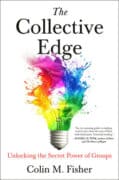 In The Collective Edge, organizational scholar Colin Fisher shifts the focus of leadership away from individuals and toward group design. Synthesizing decades of research on group dynamics, he shows how norms, incentives, and structures—not personalities—determine whether teams thrive or fracture. Columbia Business School prof Modupe Akinola praises the book for its “truly great insights into how to get the best out of teams,” underscoring its central promise: when leaders work with the invisible forces of group behavior instead of against them, collective performance and wellbeing rise together.
Revenge of the Tipping Point, by Malcolm Gladwell
Recommended by Sabaa Quao, founding president of PlusCo Venture Studio
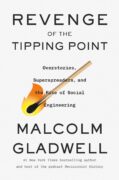
In Revenge of the Tipping Point, Malcolm Gladwell returns to the idea of social contagion with a sharper focus on systems, power, and unintended consequences. Moving across crime, public health, education, and inequality, he shows how tipping points are often engineered—not accidental—and how small design choices can cascade into massive social change. Sabaa Quao praises the book for its exploration of history and systems, saying that “All leaders can benefit in the present by stepping away from the present for a moment, reflecting on the components from the past, and projecting into the future in a cool, non-partisan way.”
Big ideas don’t live in silos.
Taken together, these books show that leadership isn’t only forged in boardrooms or policy memos—it’s shaped by habits, systems, stories, and the choices we make every day. Whether rethinking how teams work, how societies care for one another, or how history quietly structures the present, each of these works offers a clear-eyed, hopeful framework for meaningful change. Interested in hearing ideas like these unpacked live, on stage? Get in touch to book these Lavin Exclusive Speakers for your 2026 event.