





Learning practical ways to disagree better can help us make better decisions, build better teams, and ultimately lead better lives.

Harvard Kennedy School Professor | Author, How to Disagree Better

Play VideoNow Playing

Every Conflict Has a Goal (2:15)

Play VideoNow Playing

Why Disagreement Is a Vital Leadership Skill (4:40)

Lavin Exclusive Speaker

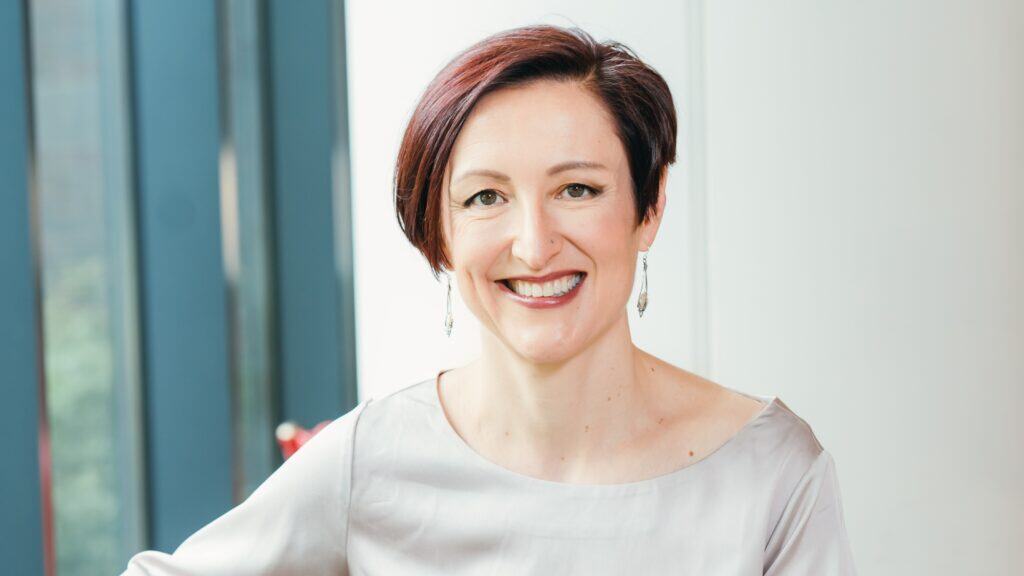
Many of us struggle to talk to people we disagree with, says Julia Minson—but learning to disagree better is the key to improving decision-making, managing conflict, and even living happier lives. A pioneering Harvard Kennedy School scientist who’s been studying the psychology of disagreement for over 20 years, Julia draws on her book How to Disagree Better to show us how disagreement touches every facet of our lives: everyday family spats, teams hampered by fear of discord, and even our polarized democracy. Most importantly, she offers concrete strategies—some as simple as lists of do’s and don’ts—that can improve our conversations and turn us into better leaders, communicators, decision-makers, and family members. A funny and down-to-earth presenter, Julia gives audiences tools to become better at disagreeing, change the behavior of those around us, and lead lives of less drama and more impact.

Julia Minson is an Associate Professor of Public Policy at the Harvard Kennedy School of Government. She is a decision scientist with research interests in conflict management, negotiations, and judgment and decision making. Her main line of research addresses the “psychology of disagreement”: How do people engage with opinions, values, and judgments that conflict with their own?

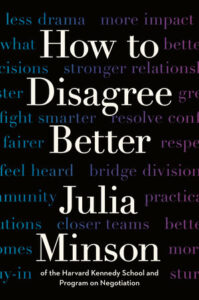
She is the author of How to Disagree Better: a science-based look into the power of disagreement and the counterintuitive secret to a life of less drama and more impact. Through original research and case studies, she reveals that people who know how to disagree are better decision-makers, peacemakers, and influencers—and she shows you how to develop that skill to reach better outcomes both at home and at work.

Julia’s work examines disagreements around hot-button, identity-relevant topics: conflicts around politics, values, and professional and health decision-making. She is interested in simple, scalable interventions to help people become more receptive to the opposing views of others. She also studies group decision-making to uncover the psychological biases that prevent managers, consumers, and policy-makers from maximizing the benefits of collaboration. This includes research on the under-weighting of advice, “wisdom of crowds,” and overconfidence.

Much of Julia’s research is conducted in collaboration with the graduate and post-doctoral members of Constructive Disagreement Lab (CDL). Julia is also the founder of the Constructive Disagreement Project, a project dedicated to disseminating cutting-edge research and developing interventions for professionals in government, education, healthcare, and the media.

Speech Topics

Team Building
How to Disagree BetterTools for Better Conversations and Relationships

What if disagreement isn’t something to be avoided, but something to be embraced? Pioneering Harvard Kennedy School scientist Julia Minson has been studying the psychology of disagreement for 20 years, and she shows how this crucial interpersonal skill can be the foundation for better relationships, stronger teams, and more successful organizations.

Drawing on her cutting-edge behavioral science research, Julia addresses urgent questions around why we struggle to thoughtfully engage with opposing perspectives in our personal, professional, and civic lives. A lifelong academic, first-generation immigrant, and mom of three, Julia brings both deep research and surprising humor to the topic, drawing on a range of experience to demonstrate why disagreement is vital and how we can do it better.

In this fascinating, broadly applicable talk, Julia explains:

  • Why people have such difficulty disagreeing (and why the answer isn’t what 90% of people assume)
  • How we can become more receptive to opposing views without compromising what’s important to us
  • The simple behavioral tools that can help us improve our conversations at home, at work, and out in the world
  • How we can not only shift our own approach but influence the behavior of those around us

Audiences walk away both equipped to disagree better and empowered to reap the benefits in every sphere of life.

Read more

Related Posts

Interested? Read more news and articles about this fascinating keynote speaker

Other News