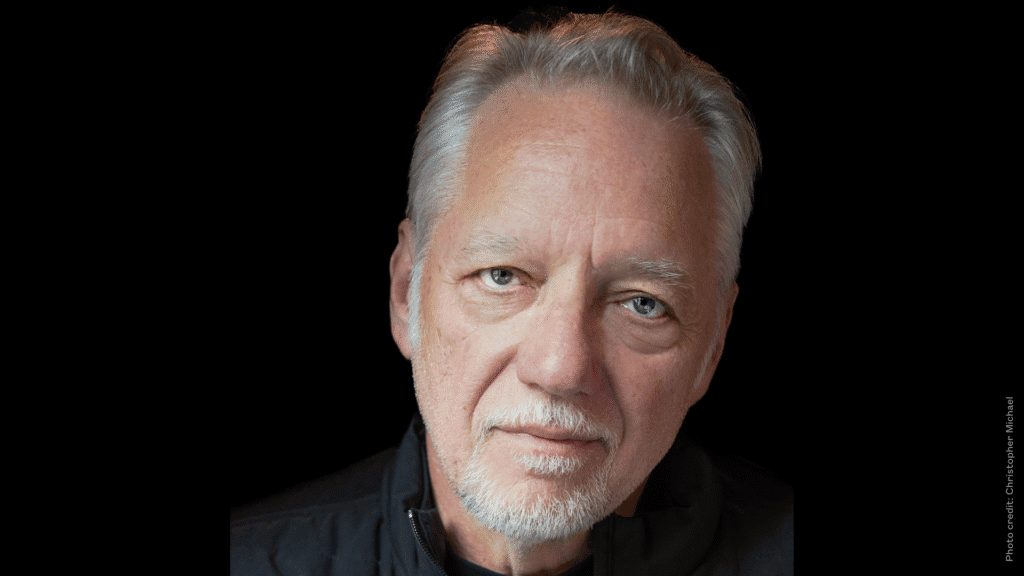
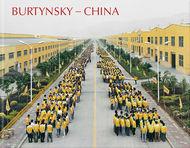
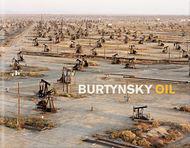
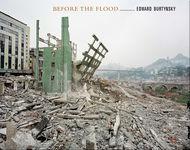
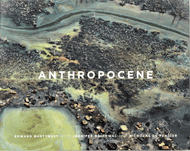
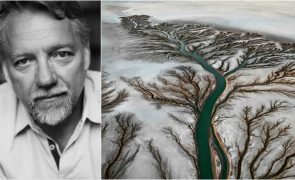
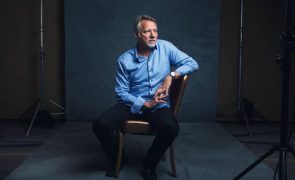
Edward Burtynsky is regarded as one of the world’s most accomplished contemporary photographers. His remarkable photographic depictions of global industrial landscapes represent over 40 years of his dedication to bearing witness to the impact of human industry on the planet. Burtynsky’s photographs are included in the collections of over 80 major museums around the world, including the National Gallery of Canada in Ottawa; the Museum of Modern Art, the Metropolitan Museum of Art, and the Guggenheim Museum in New York; the Reina Sofia Museum in Madrid; the Tate Modern in London, and the Los Angeles County Museum of Art in California.
Burtynsky was born in 1955 of Ukrainian heritage in St. Catharines, Ontario. He received his BAA in Photography/Media Studies from Toronto Metropolitan University (formerly Ryerson University) in 1982, and has since received both an Alumni Achievement Award (2004) and an Honorary Doctorate (2007) from his alma mater. He is still actively involved in the university community, and sits on the board of directors for The Image Centre (formerly Ryerson Image Centre).
In 1985, Burtynsky founded Toronto Image Works, a darkroom rental facility, custom photo laboratory, digital imaging, and new media computer-training centre catering to all levels of Toronto’s art community.
Early exposure to the General Motors plant and watching ships go by in the Welland Canal in Burtynsky’s hometown helped capture his imagination for the scale of human creation, and to formulate the development of his photographic work. His imagery explores the collective impact we as a species are having on the surface of the planet — an inspection of the human systems we’ve imposed onto natural landscapes.
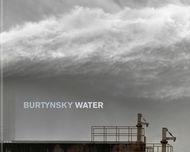
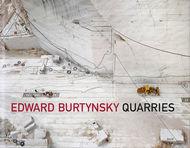
Major exhibitions include: The Great Acceleration at New York’s International Center of Photography (2025); BURTYNSKY: Extraction/Abstraction (2024-) which premiered at London’s Saatchi Gallery; Anthropocene (2018-2023) at the Art Gallery of Ontario and National Gallery of Canada (international touring exhibition); Water (2013) at the New Orleans Museum of Art and Contemporary Art Center in Louisiana (international touring exhibition); Oil (2009) at the Corcoran Gallery of Art in Washington D.C. (five-year international touring show), China (toured internationally from 2005 – 2008); Manufactured Landscapes at the National Gallery of Canada (toured from 2003 – 2005); and Breaking Ground produced by the Canadian Museum of Contemporary Photography (toured from 1988 – 1992). Burtynsky’s visually compelling works are currently being exhibited in solo and group exhibitions around the globe.
As an active lecturer on photographic art, Burtynsky’s speaking engagements have been held at the National Gallery of Canada in Ottawa; the Library of Congress in Washington, D.C.; George Eastman House in Rochester, New York; the Canadian Center for Architecture in Montréal; the Art Gallery of Ontario, Moses Znaimer’s ideacity and at Toronto Metropolitan University (formerly Ryerson University) in Toronto; and the TED conference in Monterey, California. His images appear in numerous publications each year including Canadian Art, The Atlantic, The Smithsonian Magazine, Harper’s Magazine, Flash Art, Blind Spot, Art Forum, Saturday Night, National Geographic, The New York Times, The New Yorker, The Walrus, FT Weekend, and Vogue.
Burtynsky’s distinctions include the inaugural TED Prize (which he shared with Bono and Robert Fischell), the Governor General’s Awards in Visual and Media Arts, the Rencontres d’Arles Outreach Award, the Roloff Beny Photography Book Award, and the Rogers Best Canadian Film Award. He sits on the board of directors for CONTACT: Toronto’s International Photography Festival and The Image Centre (formerly Ryerson Image Centre). In 2006 he was awarded the title of Officer of the Order of Canada and in 2008 he was awarded the International Center of Photography’s Infinity Award for Art. In 2018 Burtynsky was named Photo London’s Master of Photography and the Mosaic Institute’s Peace Patron. In 2019 he was the recipient of the Arts & Letters Award at the Canadian Association of New York’s annual Maple Leaf Ball and the 2019 Lucie Award for Achievement in Documentary Photography. In 2020 he was awarded a Royal Photographic Society Honorary Fellowship and in 2022 was honoured with the Outstanding Contribution to Photography Award by the World Photography Organization. In 2022 he was inducted into the International Photography Hall of Fame and was named the 2022 recipient for the annual Pollution Probe Award. In 2023, he received the PHotoESPAÑA Award for Professional Career and was awarded with the 25th edition of the Pino Pascali Prize. Most recently he was ranked at #2 on The Independent’s Climate List 2025. Burtynsky currently holds nine honorary doctorate degrees.
Burtynsky is currently represented by: Nicholas Metivier Gallery, Toronto; Paul Kuhn Gallery, Calgary; Paul Kyle Gallery, Vancouver; Robert Koch Gallery, San Francisco; Sundaram Tagore Gallery, New York; Howard Greenberg Gallery, New York; Flowers Gallery, London and Hong Kong; Galerie Springer, Berlin; and Weinstein Hammons Gallery, Minneapolis.