

The Lavin Agency Speakers Bureau
A speakers bureau that represents the best original thinkers,
writers, and doers for speaking engagements.
A speakers bureau that represents the best original thinkers,
writers, and doers for speaking engagements.
Slavery fueled the growth of our churches, schools, and institutions. We must face that history if we want to understand—and someday transcend—our racial divide.
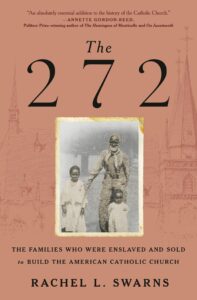
“Slavery is more than just history,” says Rachel L. Swarns. “It lives with us, all of us, now.” Schools, churches, and many of our most influential institutions are still deeply entwined with the legacy of racial injustice, and “we need to grapple with that history to find our way forward.” As the author of The 272—an acclaimed addition to our understanding of our national story that landed on TIME‘s Top 100 Must-Read Books—Rachel has prompted a country-wide reckoning into how we can transform our knowledge of the past to concrete action in the present. By revealing the compelling story of the families that were enslaved and sold by Catholic priests to build Georgetown University and the Catholic Church itself, she “advances the conversation and challenges the collective conscience” (The NYT). Through her dynamic, empathetic talks, Rachel offers audiences a fuller picture of slavery’s contemporary legacy and shows how it can bring us together in our polarized moment. “It speaks to who we are, and how we got to where we are,” she says. “And it’s critical for our understanding of our nation’s racial divide—and for our hopes of one day transcending it.”
The 272 journeys to slavery’s heart of darkness. But it is also the moving human story of some of the people who endured and survived this ordeal, and who have long awaited rediscovery.—The New York Times Book Review
Rachel L. Swarns is an acclaimed journalist, author, and NYU professor who investigates the history of American slavery, examining how we live with this history and how it shapes who we are today. Through her critically acclaimed books and inspiring talks, she challenges us to work to overcome the legacy of racial injustice in our churches, schools, and communities. At a time when powerful politicians are working to prevent us from teaching and learning these stories, her work has never been more urgent.
Rachel’s most recent book, The 272, won the American Book Award for “outstanding literary achievement.” It tells the story of the nearly 300 enslaved people who were sold by a group of America’s most prominent Catholic priests in order to fund what would become Georgetown University. Rachel follows one family through almost two centuries of enslavement, uncovering not only the stories of these forgotten people, but also how the legacy of the slave trade still shapes our institutions—from banks to universities—today. She was interviewed on NPR’s Fresh Air with Terry Gross for her vital work, and the book has met with critical acclaim from The Wall Street Journal, The New York Times, The New Yorker—landing on The New York Times 100 Notable Books, TIME 100 Must-Read Books, Kirkus 100 Best Nonfiction, and Washington Post 50 Notable Works of Nonfiction. The Washington Post writes that “The 272 succeeds not only in its telling of a tragic story. Rachel Swarns centers the experiences of enslaved people owned by the Jesuits for nearly two centuries who remained largely unnamed and unknown until now.”
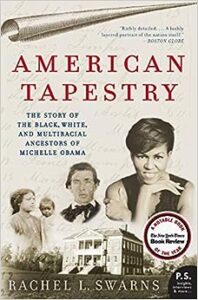
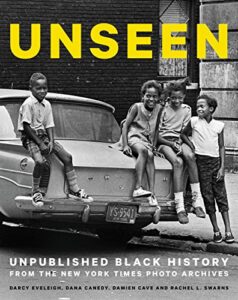
Rachel is also the author of American Tapestry, which chronicles the history of former First Lady Michelle Obama’s Black, white, and multiracial ancestors, who journeyed from slavery to the White House in five generations. It was ranked as one of 100 Notable Books of 2012 by The New York Times, and as one of the year’s best biographies by Booklist. She also co-authored Unseen: Unpublished Black History from the New York Times Photo Archives.
A longtime reporter and correspondent for The New York Times—and now a contributing writer for that same publication—Rachel has reported from Russia, Cuba, Guatemala, and southern Africa, where she became The Times’s first Black Johannesburg bureau chief four years after the end of apartheid. She was elected to the American Academy of Arts and Sciences in 2024. She is currently an associate professor of journalism at New York University’s Arthur L. Carter Journalism Institute, where she focuses on American slavery and its contemporary legacies.
Her work has been recognized and supported by the National Endowment for the Humanities, the Ford Foundation, the Leon Levy Center for Biography, the Biographers International Organization, the MacDowell artist residency program, and others. In 2023, she was elected to the Society of American Historians. She has appeared on numerous national programs, including NPR, PBS NewsHour, CNN, and CBS This Morning.

Harvard Economist MacArthur Genius Studying Economic Opportunity Director of Opportunity Insights

Author of Indivisible: How to Forge Our Differences into a Stronger Future Founder and CEO of WatchHerWork

Author of The State Must Provide: The Definitive History of Racial Inequality in American Higher Education Staff Writer at The Atlantic

One of America's Foremost Experts on the Declaration of Independence Award-Winning Author, Disunion Among Ourselves

Author, We Refuse to Forget and BLACK MOSES Contributing Writer, The New York Times Magazine Associate Professor, Northeastern University
New Yorker Writer Author of Antisocial

Harvard Kennedy School Professor Author, How to Disagree Better

Harvard Economist MacArthur Genius Studying Economic Opportunity Director of Opportunity Insights

Speaker on Stress and Leadership in the Workplace Columbia Business School Professor Host, TED Business Podcast Expert, Limitless with Chris Hemsworth

Author of Grit, the #1 New York Times Bestseller | Pioneering Researcher on Grit, Perseverance, and the Science of Success

2024 Nobel Prize Winner | 3rd Most Cited Economist in the World | Bestselling Co-Author of Why Nations Fail and Power and Progress

Harvard Business School Behavioral Science Professor | "40 Under 40 MBA Professor" | Author of TALK: The Science of Conversation and the Art of Being Ourselves

#1 New York Times Bestselling Co-Author of Abundance | Host of thePlain English Podcast | Founder of the Substack Derek Thompson

#1 New York Times Bestselling Author of How the Word Is Passed and Above Ground | The Atlantic Staff Writer

Since the founding of our republic 250 years ago, Black people in the United States have championed its revolutionary ideals and pressed the nation to be true to its promise. There is no one better than Rachel L. Swarns to chronicle the story of this long fight for freedom. A tenured professor at New York University and the award-winning author of The 272, Rachel has played a central role in the country-wide reckoning into how we can transform our knowledge of the past to concrete action in the present.
In this crucial talk, Rachel traces the first century of hope and despair that followed the founding of America. She brings you to battlefields where Black people fought for liberty, courthouses where they filed lawsuits against enslavement, plantations where some rebelled and others pressed for autonomy, and cities where they mobilized against segregation and forged alliances with white abolitionists, all the while daring to believe in the possibility of a nation that would someday reflect the soaring words of its founders. In a moment when our country seems divided, Rachel shows how knowledge of this history and its legacy can bring us together, now and into the future.

“Slavery was the engine that helped to fuel the growth of many of our contemporary institutions: universities, churches, banks, insurance companies,” says Rachel L. Swarns. We can’t pretend this history is totally disconnected from us—we need to face up to it if we want to build a better world and a fairer future.
In this compelling talk, Rachel demonstrates how slavery shaped American institutions and families and how it continues to affect us today. She illuminates her points with powerful case studies from her own reporting: the 272 enslaved people sold by the Catholic Church to save Georgetown University, the New York Life insurance company which sold insurance policies to slave owners so they could recoup 75% of a slave’s value in the event of their untimely death, the family of former First Lady Michelle Obama who journeyed from slavery to the White House in five generations, and much more.
Drawing on 22 years as a full-time reporter for The New York Times and more than a decade of research into slavery and its legacies, Rachel informs and challenges audiences by illuminating the origins of our racial divide and offering a path forward. A practicing Catholic herself, she can speak personally to how people of faith—and anyone else—can work to transcend the legacy of racism in our religious organizations, our communities, and our institutions. Audiences will walk away inspired to transform their newfound understanding of the past to concrete action in the present.