






Everyone has an AI strategy. What sets you apart is your analog strategy: the people, places, and human relationships that form the core of your organization.

Author of The Revenge of Analog

Play VideoNow Playing

How Our Identities are Tied to the Tangible (4:12)

Play VideoNow Playing

How Young People Drove the Analog Renaissance (3:25)

Play VideoNow Playing

Why Communicating Design on Paper Still Matters (6:29)

Play VideoNow Playing

What’s Driving the Vinyl Renaissance (23:12)

Play VideoNow Playing

Why Are Analog Goods Making a Comeback? (5:20)

Play VideoNow Playing

The Allure of Human Interaction (3:34)

Play VideoNow Playing

Why the Human Touch Matters in a Digital World (3:12)

Play VideoNow Playing

How Can Analog Tools Unlock Creativity and Productivity? (2:56)

Play VideoNow Playing

Do Analog Records Sound More Human? (3:02)

Play VideoNow Playing

What Do Food Trends Say about Our Society? (8:59)

Lavin Exclusive Speaker

As organizations race to find their competitive edge in the AI era, many are leaning on their digital strategy. But bestselling author David Sax argues that it’s actually your analog strategy that will set you apart from the competition: the goods, spaces, people, and relationships at the heart of what makes your organization unique. David is the author of The Revenge of Analog, as well as a consultant whose workshops help companies develop their analog strategy to succeed in a shifting business landscape. His honest, practical, often funny talks draw on his decade-long career identifying the great opportunities that sit at the intersection of our analog and digital worlds. “As organizations wrestle with AI, an analog strategy is the key to discovering where the greatest value and potential lie, and how AI might actually work to support that, rather than replace it,” he says.

“Sax is great company, a writer of real and lasting charm.”— The New York Times

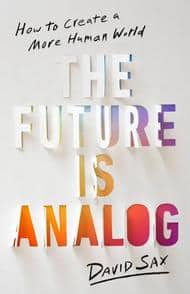
Technology won’t replace us, argues bestselling author David Sax. Instead, it can free us to be human. The analog aspects of real life are so valuable—in the office, on campus, and in society—and David can show you how to build around them to innovate without losing sight of the human experiences that really matter. He presents a vision of the future where technology like AI serves humans first and foremost, and where we can reject the downsides of technology while still embracing change. In funny, engaging talks, David draws on his most recent book The Future Is Analog—which Kirkus called “approachable” and “witty”—to make the case for taking hold of the best parts of our digital and analog worlds.

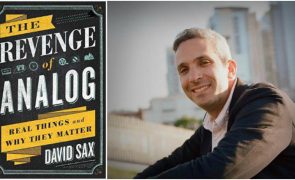
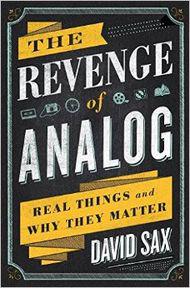
In his #1 Washington Post bestseller The Revenge of Analog, David explores the cultural shift that occurred when digital upended every industry—and enabled a comeback for analog in the process. With common sense and uncommon charm, he’s a chief chronicler of this resounding shift both on stage and in this acclaimed book, named one of the best of the year by The New York Times’ Chief Book Critic, Michiko Kakutani. Retailers and tech giants the world over are fusing digital with analog to boost creativity and outsmart the competition—and David has his finger on the pulse of what this means for the future of innovation. In a starred review, Booklist called The Revenge of Analog “essential reading,” saying that David “thoughtfully, wisely, and honestly points out how analog experiences enhance digital creativity and how humans benefit from what both have to offer.”

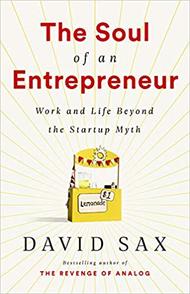
The Soul of an Entrepreneur, David shows that becoming a successful entrepreneur doesn’t mean you have to be the next Steve Jobs or Elon Musk. Instead, he tells the real stories of everyday entrepreneurs —the local barbers, restaurants, family-owned factories, and businesses small and large that hold our communities and economies together. He reveals how we can ensure entrepreneurship is open and accessible to all—restoring the essential promise of our economy that anyone can be an entrepreneur. In his talks, he offers lessons and stories from a diverse group of entrepreneurs to teach us how we can build the emotional and spiritual resilience needed to withstand crisis.

A sophisticated analyst of major trends for consumers—and wider culture—David is also the author of two other fascinating accounts of pop culture and business. In The Tastemakers: Why We’re Crazy for Cupcakes But Fed Up with Fondue, he argues that food trends are not only a collection of photos on Instagram—they have an everlasting effect on our culture, workforce, economy, health, and day-to-day lives. The New York Times calls it “a romp” through the food industry that will “leave readers wondering about how susceptible we are to the charms of any new food.” His first book, Save the Deli: In Search of Perfect Pastrami, Crusty Rye, and the Heart of Jewish Delicatessen, won the James Beard Award for Writing and Literature.

David won the National Magazine Award for his Toronto Life profile on a Jewish entrepreneur running a Chinese food mini-empire. His other writing appears regularly in The New York TimesBloomberg BusinessweekThe New Yorker’s business blog, and LA Times, and he is a regular feature on CBC Radio and NPR.

Testimonials

David Sax delivered a memorable and engaging talk on The Revenge of Analog at our event. We were fortunate to have him speak in person, his presentation was highly relevant, drawing a connection between analog traditions and today’s digital world. With his captivating storytelling, Sax made a huge impression and sparked meaningful conversation throughout the room. The audience was thoroughly entertained throughout the evening.

The Villages Daily Sun
Testimonials

The event was great and David was super! The feedback I received was nothing but positive!

InComm
Testimonials

David Sax was a big hit, got great reviews from the attendees at SOCAP Spring Symposium.

SOCAP
Testimonials

David delivered a great virtual session yesterday! It was the perfect fit for Small Business Week and certainly matched the passion that we see demonstrated by our tourism partners.

Travel Alberta

Speech Topics

Corporate Culture
Why You Need An Analog StrategyFinding Your Edge in the Age of AI

The robots are here, but they’re kind of… meh.

The shiny promise of AI’s rapid, easy, and profitable transformation is giving way to something more complex. The mass layoffs haven’t arrived, but neither have the windfall profits. To many, this is surprising, but having tracked analog’s resurgence amid the backdrop of digital’s constant hype over two decades, David Sax says it is entirely predictable.

Currently, most organizations are pursuing an AI-first strategy, rapidly adopting LLMs, then trying to figure out how to make them fit with their analog organizations. So far, this approach has proven excellent at burning through money, time, and talent. The current backlash against AI has been hard earned by a generation whose skepticism of digital utopianism came from the false promise and consequences of social media, blockchain, and the stillborn metaverse, to name a few.

What should an organization do? Figure out their analog strategy.

An analog strategy is a form of thinking that anchors organizations in their core human capabilities and physical assets: the goods, talents, relationships and interactions that not only make up any organization’s DNA, but increasingly form its competitive advantage. If you can figure out the lasting value of your people, spaces, and products, you’ll not only have a clear idea of how to invest in them, but be better placed to have AI support them, rather than supplant them.

In this practical keynote, David walks your audience through the steps you need to take to identify your analog core, develop a strategy to strengthen it, and then use AI to enhance it. Audiences walk away with a clear roadmap for identifying and leveraging what makes your organization truly unique.

Read more
Education
The Kids Are Alright(Because They’re Real)

For half a century, the marriage of education and technology has been built on tremendous promise. With each generation’s digital innovation (computers, the internet, social media, tablets, VR, Chromebooks, and on and on), tech companies, educators, and governments have chased a golden prize: unlocking millions of minds by making school more efficient, effective, and personal.

Sadly, the results have been characterized by squandered resources, broken devices, less learning and engagement. What, then, is the future of learning?

As schools and societies wrestle with AI’s potential to disrupt and transform education, David Sax reveals the lessons learned from two decades following the resurgent embrace of analog, non-digital technologies and ways of learning. From the rising popularity of Waldorf and Forest schools, to the youth-driven trends of film cameras, paper notebooks, and vinyl records, David shows how education is anchored in real relationships that need to be nurtured, and how the future of learning is more tactile, physical, and human than what we see now. This talk, grounded in David’s own experience as an author and a parent, is a must-listen for educators and parents alike, and a powerful call to embrace the human relationships that our children need the most.
Read more

Featured Books

Related Links & Articles

Interested? Read more news and articles about this fascinating keynote speaker

Other News