







AI systems are reshaping our world. We need a more expansive vision of human promise and possibility.

Distinguished Chair of the Humanities and Professor of Literature, MIT | Author, The People Can Fly and Spoken Word: A Cultural History

Play VideoNow Playing

Being Human in the Age of AI (4:45)

Play VideoNow Playing

America Will Be (5:15)

Lavin Exclusive Speaker

New developments in artificial intelligence offer us an opportunity to revisit timeless questions about the promise and purpose of human life, says Dr. Joshua Bennett. What are the highest aims of education? Which stories should we cherish and preserve? How do we build not only a good life, but a meaningful one, that is connected to the dreams and needs of others? We have the inner resources required to address these questions, Joshua says—and the instruments to build a better world in the process. Joshua is the Distinguished Chair of the Humanities at MIT, as well as the award-winning author of eight books. In thoughtful, inspiring talks, he illuminates the history of artificial intelligence, the history of American education, and the points where those two stories overlap. His work offers audiences a sense of how we might reclaim and reimagine the utopian visions of the educational institutions and public programs that reflect our most deeply held beliefs about the nature of the good and the beautiful. Therein, he makes a historically grounded case for not only optimism, but unabashed imagination. “The world we have made together is worth preserving,” Joshua says. “I hope my work is a reminder of that, and of all we have to look forward to if we are brave.”

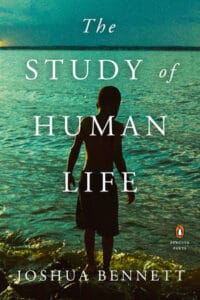
Dr. Joshua Bennett is Distinguished Chair of the Humanities and Professor of Literature at MIT. He is the author of eight books, including The Sobbing School (Penguin, 2016), winner of the National Poetry Series and a finalist for the NAACP Image Award, Being Property Once Myself (Harvard University Press, 2020), winner of the MLA’s William Sanders Scarborough Prize, The Study of Human Life (Penguin, 2022), which was adapted for television in partnership with Warner Brothers Studios, and Spoken Word: A Cultural History (Knopf, 2023), which was named a New York Times Notable Book of 2023 and a Best Book of the Year by The New Yorker.

Joshua earned his Ph.D. in English from Princeton University, and an M.A. in Theatre and Performance Studies from the University of Warwick, where he was a Marshall Scholar. He has recited his original works at venues such as the Sundance Film Festival, Madison Square Garden, the NAACP Image Awards, and President Obama’s Evening of Poetry and Music at the White House. He has also been invited to speak and teach writing workshops at hundreds of middle schools, high schools, colleges, and universities across the United States, as well as in the U.K. and South Africa.

For his creative writing and scholarship, Joshua has received fellowships and awards from the Guggenheim Foundation, the Institute for Advanced Study, the Whiting Foundation, the National Endowment for the Arts, and the Society of Fellows at Harvard University. His writing has been published in The Atlantic, The New York Times, The New Yorker, The Paris Review, and elsewhere.

Alongside his work as an author and educator, Joshua is the founder of Brontosaurus, a digital platform devoted to helping students create archives in collaboration with their teachers and loved ones. He is also the founder and principal of Solon: a design studio specializing in the art of adaptation. He lives in Massachusetts with his family.

Speech Topics

Artificial Intelligence
Gardens in the Machine

In 1828, a group of professors at Yale University described the goal of a liberal arts education as follows: “the discipline and furniture of the mind.” The document they produced, widely known as “The Yale Report of 1828,” would go on to shape higher education across the United States. More than a century later, the Yale Report’s core arguments reappear in a place you might not expect: the earliest writings on artificial intelligence.

Using this context as a starting point, Dr. Joshua Bennett maps the overlapping histories of A.I. and the American university, while considering the timeless questions that live at their intersection. What are the methods and makeup of a beautiful mind? How might they be cultivated?

With case studies ranging from the public work of Albert Einstein to the utopian learning communities founded on college campuses throughout the 20th century, this powerful, deeply human talk lights a pathway forward for those committed to the idea that education is a practice of freedom. It reminds us that there remains a vision of the university—as a site of gathering across lines of difference, and as an engine of human flourishing—that is worth preserving.

Read more
The Arts
Anywhere Archives

Whose stories are considered precious? This is a question that has animated Dr. Joshua Bennett’s work as a writer, performer, and educator for the past two decades. In this fascinating talk, he tells the story of his ongoing collaborations with teachers, families, and archivists around the country to help students across K-12 create personal archives, and preserve the memories that matter most to them.

Joshua’s journey includes the creation of a digital platform for storing cherished documents and moments in time, as well as the founding of The Adaptation Lab: a community arts program that brings teachers and students into local archives, and helps them to create original works of art from what they find there. In a cultural moment marked by a widespread sense of disillusionment and isolation, attacks on our attention spans, and siloed sources of information that divide by design, “Anywhere Archives” paints a picture of communities of educators devoted to the preservation of stories that remind us of who and what we are, and all we have the potential to become.

Read more

Other News