The Lavin Agency Speakers Bureau
A speakers bureau that represents the best original thinkers,
writers, and doers for speaking engagements.
A speakers bureau that represents the best original thinkers,
writers, and doers for speaking engagements.
We are the last generation that gets to decide whether our thoughts remain our own.
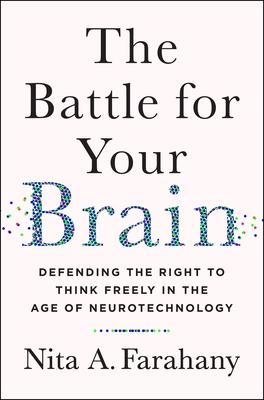
There is a world most audiences don’t know exists yet. Headsets that decode words in the seconds before you speak them. Earbuds that read the brain’s signals while you take a call. Walk-in clinics that score your cognition the way a bank scores your credit. Nita Farahany opens that landscape for audiences—and once they see it, they never look at their devices, their workplaces, or their own minds the same way again. Her subject is the collision of neurotechnology and AI at the final frontier of privacy—the human mind—and her talks manage the rare double act of being spellbinding and immediately useful. Appointed by President Obama to the Presidential Commission for the Study of Bioethical Issues, she leads global neural-data governance work at the World Economic Forum. Her TED mainstage talk and critically acclaimed book, The Battle for Your Brain, defined the global conversation on mental privacy, and her next book, Cognitive Extinction, asks the question underneath the entire AI boom: what happens to human thinking when we hand it over? At a KPMG Board Leadership Center session, 96% of attendees rated her insights valuable or extremely valuable, crediting her with helping directors “widen their aperture” on what’s coming.
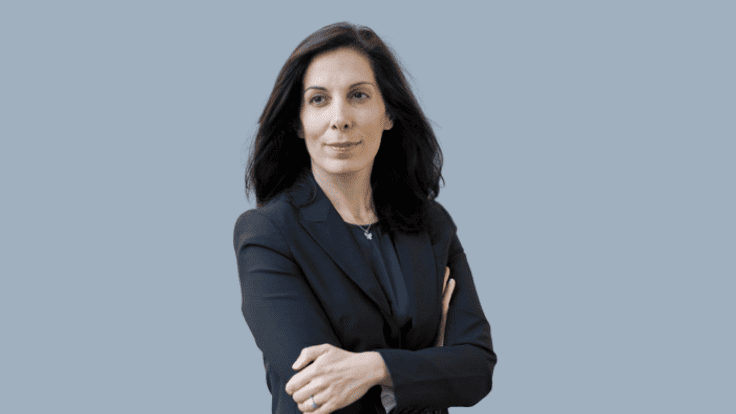
Nita Farahany is one of the world’s foremost experts on the ethical, legal, and societal implications of emerging technologies and their impact on our brains.
A distinguished professor at Duke University and the founding director of the Duke Initiative for Science & Society, she has shaped global conversations on cognitive liberty and mental privacy.
Her groundbreaking work, including her books The Battle for Your Brain and Cognitive Extinction, has had extraordinary global impact, shaping legal frameworks, ethical guidelines, and public discourse. As a result, she has been appointed to several high-profile policy leadership roles, including: U.S. Delegate and elected co-chair to the UNESCO Expert Group on the Ethics of Neurotechnology; Chair of the Uniform Laws Commission Study Committee on Mental Privacy; Reporter for the American Law Institute (ALI) and European Law Institute (ELI) Joint Project on the Principles of Biometrics; and Co-Chair of the Global Futures Council on Neurotechnology at the World Economic Forum.
Nita is a frequent commentator for national and international media, with her insights featured in The New York Times, The Washington Post, The Wall Street Journal, Wired, BBC, NPR, CBS News, CNN, Politico, The Atlantic, and TED Radio Hour. She has made notable television and film appearances, including a feature episode on Azeem Azhar’s Exponential View (Bloomberg series), Brains on Trial with Alan Alda (PBS), I Am Human (which premiered at the 2019 Tribeca Film Festival), CNN’s A.I. and the Future of Humanity with Anderson Cooper, Hacking Humanity (Al Roker Entertainment), and The UnXplained with William Shatner—all with estimated reach of over 50 million viewers globally.
Her thought leadership extends beyond traditional media, with widespread engagement in digital spaces, including over 3 million views on her TED talks, tens of thousands of podcast listeners, and extensive discussions of her work across major online platforms. She has been featured in The TED AI Show, The Big Tech Show, Privacy Files, Machines Like Us, Armchair Expert with Dax Shepherd, the Scott Galloway Podcast, and The Jordan Harbinger Show. She has been a guest on numerous high-profile podcasts, including Stay Tuned with Preet Bharara, The Gray Area with Sean Illing, The Thinking Atheist, and 80,000 Hours Podcast. She is also a recurring guest on NBC News with Gadi Schwartz in the Future of Everything segment and has been interviewed multiple times by Greta Van Susteren.
As a sought-after speaker, she presents regularly at the World Economic Forum at Davos, the Aspen Ideas Festival, TED, the American Association for the Advancement of Science, National Academies of Science Workshops, and U.S. Judicial Conferences. She has testified before Congress on the implications of emerging technologies and has been a regularly invited speaker at SxSW. Her keynote at the 2024 World Economic Forum on Brain Transparency was a landmark event in global neuroethics discussions, attended by global leaders, policymakers, and industry executives, and sparking a viral set of posts and discussions with millions on TikTok, featured on Russel Brand and The Joe Rogan Experience. The keynote sparked widespread discourse, influencing multiple policy discussions and leading to increased international interest in the concept of cognitive liberty.
For her pioneering contributions, she was named to the 2024 Vox Future Perfect 50, a list recognizing the world’s most impactful thinkers and innovators shaping the future.
Appointed by President Obama in 2010, she served on the Presidential Commission for the Study of Bioethical Issues until 2017. She has also served as President of the International Neuroethics Society, co-chair of the Neuroethics Working Group of the U.S. Brain Initiative, on the National Advisory Council for NINDS, and on scientific and ethics advisory boards for multiple corporations. Nita is co-founder and co-editor-in-chief of the Journal of Law and the Biosciences and serves on the Board of Advisors for Scientific American. She holds an A.B. in Genetics, Cell, and Developmental Biology from Dartmouth College, a J.D. and Ph.D. in Philosophy from Duke University, an M.A. from Duke, and an A.L.M. in Biology from Harvard University. She clerked for Judge Judith W. Rogers of the U.S. Court of Appeals for the D.C. Circuit before beginning her academic career.
Nita was outstanding. She is clearly one of the leading thinkers in her field, and the insights/perspectives she shared definitely achieved one of our most important objectives with this conference, which is helping board members widen their aperture and have even better boardroom conversations. 96% of our attendees surveyed found Nita’s insights to be valuable or extremely valuable.
KPMG Board Leadership Center
Distinguished Chair of the Humanities and Professor of Literature, MIT Author, The People Can Fly and Spoken Word: A Cultural History

Professor, Wharton School Poets & Quants Best 40 Under 40 MBA Professors

New York Times Bestselling Author, Human Raised and Parent Nation Founder, TMW Center for Early Learning + Public Health Professor of Surgery and Pediatrics, University of Chicago

Distinguished Chair of the Humanities and Professor of Literature, MIT Author, The People Can Fly and Spoken Word: A Cultural History

CEO and Co-Founder, Zearn Math Bestselling Author, Math Mind

Speaker on AI and Education Executive Director of the Stanford Accelerator for Learning

#1 New York Times Bestselling Author of Grit and Situated | Pioneering Researcher on Grit, Perseverance, and the Power of Situation

Nobel Prize Winner | 3rd Most Cited Economist in the World | Author, What Happened to Liberal Democracy? | Bestselling Co-Author, Why Nations Fail

#1 New York Times Bestselling Author of How the Word Is Passed and Above Ground | The Atlantic Staff Writer

Former Deputy Prime Minister of Canada | Bestselling Author, Unreliable Boyfriend and Plutocrats | CEO of the Rhodes Trust

#1 New York Times Bestselling Co-Author of Abundance | Host of thePlain English Podcast | CBS News Contributor

The deepest change AI brings isn’t to the economy. It’s to the thinking we stop doing ourselves. Drawing on her latest book, Cognitive Extinction, world-renowned scholar Nita Farahany reveals how we are losing touch with our own bodies, offloading our capacity to think from within, withering our relationships with each other, all in the context of a rapidly changing world. And she helps us see clearly what we stand to lose if cognition quietly atrophies while machines get sharper. The talk is a revelation about what thinking is for, and it lands with practical force. Audiences leave with a framework for deciding which thinking to hand over and which to protect, and a case they can carry into their organizations for treating human judgment as something to cultivate rather than automate away.

This is the talk that makes audiences gasp, then think. Nita Farahany takes them inside a world they didn’t know was already here: consumer devices that track attention and emotion, startups decoding intended speech from brain activity, employers and governments discovering what neural data can reveal. She shows where neurotechnology is heading, how its convergence with AI changes everything, and why the privacy of the mind itself is now in play. Audiences leave astonished by what exists, clear-eyed about what’s coming, and equipped with the questions that matter for their own lives, products, and workplaces, along with a rights framework, cognitive liberty, for navigating all of it.

Neurotech and emotion-sensing tools are being sold to employers as productivity solutions, and regulators are already drawing lines around them. Nita Farahany shows audiences the surprising reality of workplace brain surveillance that already exists, why monitoring minds backfires on the morale and creativity it claims to boost, and where new legal limits on emotion recognition at work are landing. Leaders leave understanding how to build performance on autonomy and trust, ahead of laws arriving faster than most compliance calendars assume.