5 Tips for Your Thanksgiving Weekend: Lavin Speakers’ Cooking and Conversation Tips for Your Best Thanksgiving Ever

Remember: food is about pleasure.

Too often, we get caught up in the stress of cooking a Thanksgiving feast—and forget that the real point of food is the joy of eating it in good company. “Eating is about a destination or breaking bread or some solitude,” says Stephen Satterfield, host of Netflix’s Peabody Award-winning docuseries High on the Hog, which explores the complex stories behind the food we eat. “The origins give you a profound respect and framework, but the experience of eating is about pleasure.” So if you’re tempted to stress out about what you’re cooking, take a step back and remind yourself of why you’re doing this in the first place.

Think bigger than turkey.

The centerpiece of the Thanksgiving table is usually the turkey. But a series of sides with seasonal ingredients can both elevate your meal and provide options for those at your table who might not eat meat. Chef Bryant Terry, who has spent his career fighting for a more sustainable (and delicious) food system, offers recipes for Southern holiday staples using vegan ingredients and local, seasonal produce. “When you use something from a farm that’s 50 or 100 miles outside the city, it’s going to be so much more flavorful and delicious than something that’s been shipped across the globe,” he says.

Learn to HEAR other people.

Thanksgiving brings together family members from different walks of life: people you love but might not agree with. Fortunately, Harvard prof Julia Minson has developed a framework for having conversations that leave the door open for future dialogue. “The acronym is HEAR,” she explains. “It stands for Hedging, Emphasizing agreement, Acknowledging the other perspective, and Reframing to the positive. You don’t have to change your own convictions. You don’t have to compromise. But you’re showing with every sentence that you’re incorporating the other person’s perspective into your speech.”

Master the follow-up question.

When you’re catching up with a family member you haven’t seen in a while, how many questions is too many? It’s way more than you think. In research on sales calls, Harvard Business School prof Alison Wood Brooks (author of TALK), found that the most successful agents were the ones who asked the most questions. In fact, asking too many questions (4 questions a minute!) is still better than asking too few. And the most important question you can ask is a follow-up question: “You’re showing a very pure and focused interest in them, which feels really good, and you’re listening to what they’re saying.”

Get playful.

When we think about navigating dinner conversations, we don’t usually think about playing together. But “if we can play together, we can live together,” says Cas Holman. A world-renowned designer and author of the hot new book Playful, Cas argues that in a world dedicated to efficiency and focus, play connects us to each other and to ourselves. And play is much broader than we usually think: “For some adults, rearranging the living room is play. Reading is play. A lot of conversations are playful.” This Thanksgiving, ask yourself how you can incorporate moments of playfulness, by yourself and with others.

Want more from these speakers?

Get in touch with us! We’d love to chat about bringing them to your event.

The Entrepreneur’s Guide to Changing the World: 3 Ways Business Thinking Can Solve Our Biggest Problems

1. Don’t stop at “a little bit better.”

“Often, when people talk about their ideals, they say something like, ‘Let’s make the world a little bit better,’” Rutger says. “I’ve always disliked that phrase. Why ‘a little bit’? When I hear entrepreneurs talk about their company, they don’t say, ‘Let’s make a little bit of money.’ They’re ambitious. That’s the attitude we should have right now.”

Entrepreneurs understand what changemakers need to know: there is no point in stopping at the bare minimum. Moderate ambition needs to moderate results—and revolutionary change requires revolutionary thinking.

“We face enormous challenges as a species,” Rutger says. “So we have to look for our moral maximum. How far can we push ourselves? Life is short. It lasts for around 4000 weeks, and then we die. So we might as well do something really interesting, meaningful, and worthwhile with our lives.”

2. Ditch the urge to be “right.”

In 1783, a group of a few dozen businesspeople in Britain decided to take on one of the world’s oldest and most entrenched institutions: the slave trade. And they succeeded—not by fighting moral wars, but by understanding the power of pragmatism over purity.

“They asked themselves if they should take down the whole system of slavery, or first focus on the transatlantic slave trade,” Rutger says. “They had one very powerful argument against the slave trade: their discovery, through dogged investigative journalism, that 20% of white British sailors died during voyages across the Atlantic.”

It may seem strange to us that the activists put that argument forward instead of mobilizing around the needs of enslaved people. But while British politicians didn’t care about the latter, they certainly cared about the former. “The abolitionists were smart enough to leverage that to push forward the law that eventually banned the slave trade in 1807,” Rutger says. “I deeply admire that pragmatism, because people who currently suffer under oppression, inequality, and poverty don’t care about the fact that people like us are ‘right.’ They care that we achieve results, and that we get things done.”

3. Think bigger. Then think bigger than that.

We’re facing down an innovation crisis. Not a crisis of ideas, or talent, but a crisis of ambition strangled by bureaucracy.

The symptoms are everywhere, but Rutger points to the UK, where reopening a 3.3-mile train line took 79,187 pages of paperwork: 14.6 miles printed out, or 4.5 times the length of the actual railway. Meanwhile, during the time the US produced practically no high-speed rail lines, China built almost 30,000 kilometers of it.

And this isn’t just about trains. Europe has massive institutes for regulating AI—complete with armies of regulators—despite having barely any AI companies to regulate.

The solution isn’t to abandon all regulation. “But for me, social democracy has always been about building first and regulating after that,” Rutger says.

The entrepreneurial instinct—the drive to build, scale, and create—is what separates societies that shape the future from those that merely manage decline. If we want to change the world, we’ll need to dream bigger, and get rid of the red tape stopping others from doing the same.

Your 4000-Week Business Plan

“No one wants to lie on their deathbed thinking, ‘I wish I saw more boring PowerPoints,’” Rutger says. If we really want to change the world—in a big way, not simply by shipping our minimum viable product—we have to combine the idealism of an activist with the ambition of an entrepreneur.

And the business leaders who already know how to execute have a massive advantage in creating change. So when it’s time for your next project, consider choosing something that isn’t a new app or platform. Choose something that historians will look back on in 200 years. “There’s so much more out there,” Rutger says. “You can build a legacy that actually matters.”

To hear more from Rutger…

Learn more about him here, and get in touch with us to book him to speak at your event! And watch his episode of Lavin Voices here:

2 Reasons AI Isn’t Working for Your Company (And What to Do Instead)

Mistake #1: You’re expecting a grown-up, but the tech’s still a toddler.

AI may command trillion-dollar valuations, but that doesn’t mean it’s mature. And that shouldn’t be a surprise to us: ChatGPT has only been around for a few short years. “When was the last time you talked to a two-year-old?” Hans Peter asks. “They hallucinate all the time. They tell stories, random stories. It’s wonderful to listen to, but it’s also a little bit fantastical.” The difference is that this particular toddler has attracted billions of dollars in investment, creating wildly inflated expectations for mature performance.

The Google robots demonstrated this learning curve in tangible ways. “They were pretty much at this two-year-old stage,” Hans Peter recalls. “They would bump things over and drop things on the floor and go ‘whoops,’ and then pick them up again and learn all these things with a lot of human supervision.” Yet despite their limitations, these robots eventually “learned” how to do routine tasks and began to provide genuine value to the Google campuses. And the same thing will happen with generative AI tools: “Over time, as they train and as they become more attuned to what the world looks like, they will hallucinate less, and they will tell less fantastical stories, and learn. What we’re dealing with here is technology in its infancy—and in spite of that, it’s remarkable how quickly things are happening.”

You wouldn’t expect polished, error-free performance from a two-year-old. So don’t expect the same of AI.

What to do instead: You can and should use AI for productivity and efficiency at work—just remember to treat it like a talented but inexperienced hire. Set clear guardrails around its use. Supervise outputs carefully, especially for mission-critical applications. Most importantly, hold employees accountable for the final results rather than letting them publish raw AI outputs. “Don’t let employees just do the quick thing and publish something that came straight out of the mouth of Gemini or Claude,” Hans Peter says. “Have them do the human layer on top, which is critical analysis and thinking.”

Mistake #2: You’re waiting for the future, but it’s driven by today’s experiments.

By the end of his tenure at Everyday Robots, Hans Peter had over a hundred robots working across the Google campuses: cleaning tables, sorting trash, and even making music and dancing. But these breakthroughs didn’t happen overnight. Each task took relentless iteration for humans and robots alike, even for something as seemingly simple as sorting trash into the appropriate bins. 20 physical robots practiced sorting trash in Google’s facilities—and at the same time, 245 million virtual robots continued learning in simulation. “I like to think of it as if they were dreaming during the night,” Hans Peter says, “and then the physical robot wakes up and gets a new model from that dreaming.”

AI development isn’t about perfect solutions but about continuous learning. Each failed attempt, each minor improvement, each small success builds toward genuine capability. And the same is true for those of us looking to leverage AI in the workplace: the companies waiting for AI perfection will find themselves far behind organizations that started learning years earlier.

Think of your AI journey like you’re looking across a deep valley towards a mountain range. You can see the destination clearly: a warm, inviting hut atop a mountain representing AI’s full potential. But reaching it requires navigating what Hans Peter calls an “alligator-infested valley” full of obstacles, wrong turns, uncomfortable challenges, and probably mosquitoes. “It’s going to take some effort to get there, and some tricky navigation.”

What to do instead: Set guardrails, yes, but don’t let that stop you from getting to know the tools. Start experimenting now, even if your first attempts feel clunky or incomplete. Create small pilot programs where failure won’t damage your business but success could provide meaningful value. Treat every instance of AI implementation as a learning opportunity rather than a finished solution. And don’t restrict employees from using AI tools—instead, teach them to use these tools effectively while maintaining critical thinking and quality control. “Have your business become a learning organization that learns how and where AI fits into your daily workflows,” Hans Peter says.

Interested in booking this leading keynote speaker on AI and the future of work?

Learn more about Hans Peter here, and get in touch with us to book him to speak at your event!

Hans Peter sat down with us recently to explain why AI should take our jobs, and why the robot revolution “can’t come fast enough.” Watch his episode of our Lavin Voices podcast:

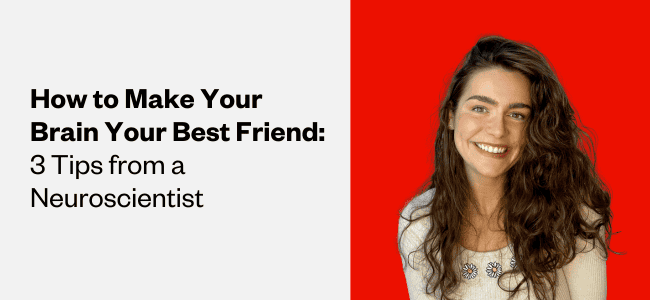
Make Your Brain Your Best Friend: A Neuroscientist’s 3 Tips for a Happier, Healthier Life

Rachel is a playful and bracingly real science communicator: an online phenom whose “Rachel the Neuroscientist” videos demystify the principles of brain science, empowering her over 2 million online followers. She sat down with Lavin to explain 3 ways to help your brain work for you instead of against you—and unlock resilience, joy, and connection in the process.

1. Stop trying to hack your brain.

If you were having a problem with your child, would you start trying to figure out how to hack your child? “You’d try to understand the distress and provide care,” Rachel says. “So why do we try to hack our brain into submission?”

Drawing on her new book, How to Make Your Brain Your Best Friend (out now!), Rachel suggests a new way of helping your brain work for you: by seeing it as an entity that’s separate from yourself. “Of course you are your brain, your brain is you. But when you think of yourself as two separate entities, suddenly it feels like you’re charged with the care of a wobbly little pet. And you realize that there are no hacks—only habits of kindness and care.”

2. Engineer moments of delight.

​​​​We spend our days laser-focused on things that stress us out. What if we built a habit of delight to help our brains navigate the modern world?

Rachel defines delight as “a pleasant experience, a moment of connectedness, that takes you by surprise.” This means it’s often spontaneous—but you can engineer opportunities for delight into your day.

Start by paying attention. Instead of focusing on your phone during your commute, look up and note what reliably brings you joy, awe, or connection. Then find the environments where delight is likely to occur. And don’t wait for the weekend or your yearly vacation—you can find time to recharge in the course of your everyday life, if you leave the door open for delight.

3. You have less control than you think.

We like to think that we’re sitting in the driver’s seat, with our brain in the backseat. We assume, for example, that we can scroll through videos of people being rude to one another without letting that affect our worldview. “But the brain is gobbling up everything indiscriminately, which meaningfully influences your feelings, your thoughts, your behaviors,” Rachel says.

The brain has its own agenda—it’s always trying to mend itself and protect you. “You don’t get to choose how it navigates the environments you put it in,” Rachel says. “What you do get to choose is what you’re feeding it.”

So the next time you’re tempted to wade through unhelpful or damaging information, remember the “wobbly little pet” you’re charged with—and choose to help it help you instead.

Interested in hearing more from Rachel?

Get in touch to learn more, and to book her to speak at your next event!

3 Ways to Collaborate With AI That You’ve Never Considered

Turn AI into the best coach you’ve ever had.

“I have worked with a lot of professional coaches and attended many leadership trainings and retreats. But I’ve never had a better coach than the one I have now,” says Alexandra Samuel.

Alexandra is a hotly in-demand expert on AI and the digital workplace. In her new article for The Wall Street Journal, which was on the cover of that publication’s Artificial Intelligence Report, she explains how she built a custom GPT to act as her own coach. And in her HBR IdeaCast podcast episode, she shows you how to do it too.

Collaborating with AI doesn’t replace human collaboration, Alexandra explains. But it does give you 24/7 access to a coworker whom you can be completely honest with. “There’s no judgment, because there’s no judge. I’m able to let loose, and take all the time I need to get something just right.”

Treat ChatGPT like a creative agency.

“Congratulations! You’re the proud owner of a new creative agency,” says Greg Hoffman, former Chief Marketing Officer at Nike and author of Emotion by Design.

ChatGPT and other generative AI tools have given us all the tools to be powerfully creative. Thinking, ideating, and prompting AI is a brand new application of your creativity—and it doesn’t depend on having the budget for an external agency. “We could, in the next hour, conceive a product, build a business plan, create a distribution strategy, and finalize a go-to-market plan with creative.”

And this frees us up to not only create without constraints, but to experiment, fail, and move on without getting stuck. That hypothetical go-to-market plan? “I’m not saying it would be good,” Greg says. “But that doesn’t mean that the exercise is a failure. It just builds to the next thing.”

Take AI home with you.

“If you want to get the most out of AI for your company, don’t let your experience of AI stop when you leave the office every day,” says Katie Drummond. “I’ve learned more about it in my own home than I have as the editor-in-chief of WIRED.”

As the global editorial director at an iconic tech magazine, Katie leads teams on four continents and oversees some of the world’s most influential journalism on emerging technology.

She says that taking AI outside the office can give you a lower-stakes environment to experiment in. “I would gladly take the risk of getting my daughter’s Show and Tell date wrong over messing up a mission-critical project at the office! So expand your sandbox. You can be much more creative, more expansive in your understanding of AI if you do it outside of the constraints of the office—and then bring some of that creativity back to work with you.”

For more from these leading speakers…

Get in touch with us! We’d love to tell you more about them and help you bring one of them to your event.

3 Tips for Making Better (And Faster) Decisions: Leadership Experts Weigh In

Just start running.

You’re in the woods and you come face to face with a bear. What do you do?

Many organizations are facing down bears of their own: major threats like rapid change, a rocky economy, and the rise of AI. And what do they do? “Companies will do a very company thing,” says Neil Hoyne. “They say, ‘The bear is coming at us, and it’s going to kill us—so let’s gather 100 people in a room to try to solve the bear problem.’”

As Google’s chief strategist, Neil has spent almost 9000 hours (over a full year!) talking to CEOs, boards, and investors about how they make decisions and navigate change. He says the best companies he works with do something different when they recognize a threat: “They just start running.” They’re not trying to outrun the bear. They’re jus​​​​​​t trying to outrun the competition.

So the next time you’re facing a big business challenge, don’t waste time trying to find the perfect data, or the ideal solution. Just start running.


Facing a big decision? Flip a coin.

What sets the most successful people apart? It’s not hard work. It’s their intuition.

Star Northeastern and Harvard business prof Laura Huang has interviewed the world’s most accomplished people: from Pulitzer Prize winners to Olympic athletes. And she found that the most important element in their success was their intuition: the combination of external data and personal experience.

And you can use your gut feel in practical ways both at work and in life. For example, many of us spend so much time gathering inputs and information for a big decision only to find ourselves stuck at the moment of truth. If that’s you, try this: flip a coin. As you see the outcome, note how you’re feeling, and what your inner voice is telling you. Are you excited? Disappointed? Then take that information, trust your gut, and go make your decision.


Take advantage of fresh starts.

Every January, we make admirable New Year’s resolutions: I’ll go to the gym more, diet more, read more books. Katy Milkman, bestselling author of How to Change, says that “fresh start” mentality doesn’t just affect us at New Year’s. We feel the same way after a birthday, a big holiday like Labor Day, and even the start of a new week. And we can use that to make better decisions.

Think about the important dates you have coming up. Maybe your birthday or anniversary is around the corner, or your company’s new fiscal year is starting soon. You can use that to inspire change and goal-setting, both individually and as a company.

And if you’re the kind of person whose gym attendance declines dramatically in February, try using your fresh start to do a one-time action that has big effects down the line. For example, in one study, Katy encouraged employees to sign up for their company’s savings program after a fresh start—and saw a 30% increase in savings over the next 8 months.


For more from these leading speakers…

Get in touch with us! We’d love to tell you more about them and help you bring one of them to your event.

How to Get Happier: Science-Backed Tips From 3 Mental Fitness Experts

Change your story to change your life.

“All of us walk around with stories about our lives,” says Lori Gottlieb. “Why things went wrong, why we treated someone a certain way (because, obviously, they deserved it), why someone treated us a certain way (even though, obviously, we didn’t). Stories are the way we make sense of our lives.”

Lori is the instant New York Times bestselling author of Maybe You Should Talk to Someone (which has sold over 2 million copies). In her viral TED Talk, which has been watched over 7 million times, she argues that “we get to choose what goes on the page that lives in our minds and shapes our realities.”

So the next time you’re telling yourself a story that’s making you feel anxious or angry, take a step back and ask if there’s a way you can reframe it to add more nuance, more agency, and ultimately more possibilities for what it can become.


Play to your (scientific) strengths.

We’ve all been told to “play to your strengths.” But how many of us actually know, with scientific backing, what those strengths are?

Dan Lerner is the positive psychologist behind NYU’s most popular elective, “The Science of Happiness.” He says that when we identify and use our strengths at work or at school, we’re more likely to achieve our goals, work better in a team, and tap into greater wellbeing in the long-term.

Dan suggests looking into which of the 24 science-based character strengths you possess the most of: from gratitude and fairness to zest and humor. (You can use this free quiz.) Then think about how you can incorporate your top strengths into your day-to-day. If bravery is one of your top 5, try asking a tough question in a meeting. If you rank high for curiosity, talk to someone about finding more learning opportunities. And then identify people whose strengths complement yours so you can do more meaningful work together.


Use your time to get happier.

Feeling like there aren’t enough hours in the day? You’re not alone. But Cassie Holmes says we actually do have enough time—and if we learn to use it well, we’ll find ourselves both more productive and happier overall.

This star UCLA professor’s bestselling book, Happier Hour, is packed full of strategies for using your 24 hours to craft a more fulfilling life. She suggests first taking an account of your time with a tracking sheet, recording what you’re doing and how you’re feeling. Then, look at what activities make you happiest, and figure out how to maximize them.

“Happiness isn’t about the quantity of time we have available,” she says. “It’s about the quality: how we invest the time that we have, and how invested we are while spending that time. With just a little intention and attention, we can find extraordinary happiness in ordinary moments.”

Curious about these leading speakers?

Interested in booking one of these happiness speakers for your event? Get in touch with us—we can help!

4 Tips for Implementing AI in Your Organization

Think of AI as a “motorcycle of the mind.”

“Steve Jobs used to say that computers are a bicycle for the mind,” says Nick Thompson. “I think of AI as a motorcycle for the mind.”

Nick is the CEO of The Atlantic, former editor-in-chief of WIRED, and author of the forthcoming book The Running Ground. He explains how he uses generative AI tools not only to do various tasks for him, but to improve his skills: “to test myself, to challenge my assumptions, to learn new things.”

He argues that technology will help us level up our capacity in the long term. “Technology does distract us,” he says, “but it also allows us to become much more sophisticated in how we process information. Our ability to imagine greater things just expands with time.”

Ask not what AI can do for you.

When we start implementing AI into our workflows, many of us spend time figuring out what AI can help us with. But that’s not the best way to start.

“What ends up happening is that you pivot a lot—because there are many, many things that AI can do—and never really get any of the successes you need,” says Radhika Dirks, global AI advisor and CEO of XLabs.

Instead, start with a vision. “What do you want to create?” Radhika asks. “The more daring, the more impossible it sounds, the better. Don’t hesitate to sound different. And what you will soon realize is that the right technology, the right AI, the right talent will come to you.”

Always doing the same thing? AI can help.

Every job has areas of repetition—yours is probably no different. What if you could free yourself up to do more exciting strategic work?

“You have codified systems, strategies, and processes. It stands to reason that there’s a lot of repetition in them,” says Fab Dolan, founder of the AI startup 99Ravens and former Global Chief Marketing Officer for Android. “These repeatable, high-value processes can become building material for AI systems.”

And that doesn’t mean just writing the same email over and over. At his startup 99Ravens, Fab is using AI to make cross-team conversations easier by making individual expertise more accessible to the whole team. “That’s the biggest opportunity for most people within AI right now.”

Remember: You’ve been here before.

AI may seem like a brand-new challenge. But you’ve done this before.

“The internet, the mobile phone—this isn’t any different,” says Justin Reilly. “In many ways, AI is even more accessible to companies. If you were trying to build for the smartphone in 2007, there were maybe five companies in the world that could help you. Now, you can just sign up for an account with an LLM and start playing with it.”

The CEO of Wavelo and former Head of Product at Verizon, Justin has spent a career spearheading AI transformations. He suggests looking back to what your internet and mobile rollouts looked like—and then bringing the lessons you learned into your AI strategy.

Curious about these leading speakers?

Want to learn more about any of these brilliant thinkers, or invite them to speak at your event? Get in touch with us—we’d love to help.

4 Strategies for Surviving (And Harnessing) Uncertainty

Listen to your emotions. Even the bad ones.

When we feel negative emotions, like anger or fear, it’s tempting to shut them down. But Ethan Kross says all emotions offer important information for us, if we know how to understand them.

“All negative emotions, when they are experienced in the right proportions, are really good for us,” he says. “For example, I experience regret—and that alerts me to something that could have gone better in the past, and prepares me to not repeat that circumstance in the future.”

Ethan is an award-winning psychologist at the University of Michigan, as well as the bestselling author of Chatter and Shift. He argues that we can lead, perform, and live better when we know how to use our complex emotions.

Fall in love with your stress.

Take a moment right now to think about something that’s stressing you out. Our dominant response is to try and deny, reduce, or counteract the stress. But Modupe Akinola says some stress is good for us—if we know how to use it.

“Playing for the long term requires shifting our perspective on stress,” says this celebrated Columbia Business School professor. “For example, simply reminding someone that stress has enhancing properties can make them more creative and enable them to think more flexibly.”

Now go back to that thing that’s stressing you out. “Don’t try to deny the stress. Instead, use it,” Modupe says. “Inherent in that stress are opportunities that can take your performance and your company to an even better place.”

Use anxiety to prepare for the future.

“Anxiety is an emotion,” says Tracy Dennis-Tiwary. “It’s not a disorder. It’s not a red flag. It’s not a danger signal. First and foremost, it’s an emotion. It feels really bad. But it’s actually good for you.”

A clinical psychologist and the bestselling author of Future Tense, Tracy reveals how anxiety turns us into “mental time travelers,” helping us prepare for an uncertain but hopeful future.

Tracy argues that we can turn anxiety into an ally by learning to channel it to create the future we want. “Anxiety lives in that space between where we are now and where we want to be, and it energizes us to bridge that gap.”

Remember: There’s hope on the other side.

Are you part of Generation Dread? Sometimes it feels like we’re anxious about everything, from the day-to-day to the looming climate crisis. But Britt Wray says that when we work through these anxieties, we’ll find hope and purpose on the other side.

Britt is the author of Generation Dread and director of Stanford’s CIRCLE: a research and action initiative focused on emotional resilience and climate leadership. She shows that acknowledging and dealing with our climate anxiety can help us find purpose and avoid burnout.

Britt says that to succeed in the long game, we need to take action, manage our emotions, and take breaks in equal measure. “It’s a very hopeful moment to be in, as we do this difficult yet fulfilling, meaningful, and purposeful work.”

To learn more from these leading speakers…

Get in touch with us today! We’d love to help you bring one of them to speak at your event.

3 Counterintuitive Tips for Leaders in 2025: Questions, Stress, Curiosity

1. Ask more questions. No, more than that.

How many questions is too many? It’s way more than you think.

In research on sales calls, Harvard Business School professor Alison Wood Brooks found that the most successful agents were the ones who asked the most questions. But more than that, she found that the line between “lots of questions” and “too many questions” is much further out that most of us think. In order to reach that tipping point, you’d have to ask 4 questions a minute—that’s 1 question every 15 seconds!

When you learn to ask more and better questions, you’ll be able to listen so people talk—and get the best out of your relationships at work, Alison says.

2. Get to know your stress—and then use it.

Stress is the #1 killer of high performance. But if we learn how to leverage it, it can help us outperform our competitors and reach new heights.

“You need to get to know your stress like you would get to know somebody on a first date—so that you get to a point where you learn to fall in love with it,” says Modupe Akinola, one of the most highly rated professors at Columbia Journalism School. Modupe suggests that leaders use stress to bring the best out of their teams: for example, you could try introducing a time limit to get the most creative ideas without judgment, or creating overwhelming conditions so your teams are forced to rely on one another and use their unique strengths.

3. Fortune favors the curious.

Don’t just look at what your competitors are doing. Look at what everyone else is doing: from developments outside your sector to innovations that are quite literally out of this world.

Greg Hoffman, former CMO of Nike, explains that the air cushioning technology behind some of Nike’s most beloved shoes was actually invented for space suits by a NASA engineer. If Nike hadn’t been curious about the technology and willing to take a risk, they would have missed out on a massive opportunity. Greg suggests that leaders exercise curiosity like a muscle: “What starts out as homework becomes habit over time.”

Want to learn more about any of these leading thinkers, or invite them to speak at your event? Get in touch with us—we’d love to help.